


Martial Arts Liability: Lessons from Del Mar Jiu Jitsu Case.
This article delves into the significance of the Del Mar Jiu-Jitsu case and its implications for martial arts liability and insurance. Attorney Gabe D'Antonio's comprehensive overview of the jury verdict provides valuable insights into the reasoning behind the ruling. Moreover, the article highlights essential risk management strategies for gym owners, emphasizes the importance of appropriate insurance coverage, and stresses the need for gyms to regularly review and update their risk management plans.
On May 4th, 2023, Attorney Gabe D'Antonio of Gordon & Rees released a comprehensive paper on the $46 million jiu-jitsu lawsuit. In his well-written overview, Attorney D'Antonio, who is an avid practitioner of jiu-jitsu alongside his legal practice, offers insights into the jury verdict, outlining its implications for the sport now and in the future. Titled "What Del Mar Jiu-Jitsu Case Means for Martial Arts Liability," this article is a valuable resource for gym owners seeking a deeper understanding of the ruling. You can read the full article by clicking here >>.
What Can BJJ Gym Owners Do Now To Manage This Risk?:

As a prominent case within the Jiu Jitsu community, the Del Mar Jiu-Jitsu lawsuit stands as a reminder that legal battles like this can and do happen in our community, and should not be taken lightly. It also carries a significant message for BJJ gyms: a call to action to thoroughly evaluate and review their risk management plans moving forward. This lawsuit serves as a wake-up call, urging gym owners to prioritize the safety of their participants and take proactive measures to protect against potential liabilities. Within his article, Attorney Gabe D'Antonio emphasizes two crucial risk management strategies that gym owners can implement immediately, to reduce potential liabilities at their facilities:
Acknowledging Potential Bodily Harm: Gym owners and operators must never downplay or ignore the physical injuries that can arise from martial arts training. Gym owners can set a precedent for safety and responsible training by recognizing and communicating the inherent risks to participants.
Enforcing Discipline and Compliance: Attorneys D'Antonio urges gym owners to be confident when removing students or instructors who fail to follow instructions and the rules, regardless of their belt rank. Gyms can ensure a safer training environment for all participants by maintaining strict discipline and enforcing compliance when it comes to training safely.
Attorney Gabe D'Antonio's two recommendations serve as an excellent starting point for gyms that are in the process of reviewing or creating a comprehensive risk management plan. By emphasizing the importance of acknowledging potential bodily harm and enforcing discipline and compliance, these guidelines place a strong focus on the safety and well-being of BJJ participants. Having a well-developed and regularly reviewed risk management plan is absolutely crucial for ensuring the safety of all participants on the BJJ mats and it should not be overlooked, as in any legal case involving injuries in mixed martial arts, both the defendants and the gym itself will be scrutinized.
A comprehensive risk management plan not only safeguards the well-being of participants but also serves as a vital tool in legal trials, emphasizing the gym's commitment to safety and minimizing potential liabilities.
The Importance of Keeping Gym Insurance Policies Up to Date:
In addition to discussing risk management strategies in the paper, D'Antonio summarizes the entire situation with a warning to the martial arts community, stating that the long-term effects of the Greener case on the legal practice and martial arts community are yet to be fully understood. He concludes that while it is of hope that this case is an isolated incident, a more realistic expectation is an increase in litigation arising, and advises that BJJ gym owners should have their liability insurance programs reviewed yearly to ensure proper coverage for their unique risks.
Subsequently, Brazilian Jiu-Jitsu Academies should double-check to ensure that their commercial insurance policy provides appropriate coverage for participants in those insurance policies. For example, it is not uncommon for insurance companies to issue general liability insurance to BJJ gym owners and exclude liability for the participants. The problem is that although that type of insurance coverage may be easy to find or cheap to purchase, that contract exposes the gym owner to lawsuits that arise from allegations similar to those from the Jack Greener case. Neglecting participant liability coverage could result from various factors:
Lack of Specialization: Insurance agents or brokers who lack expertise in sports or martial arts insurance may overlook the specific needs and risks associated with BJJ or MMA gyms, inadvertently omitting participant liability coverage from the policy.
Miscommunication: Poor communication between gym owners and insurance agents can lead to errors. If the gym owner fails to express their need for participant liability coverage clearly, or if the agent overlooks critical aspects of the gym's operations, the resulting policy may not provide the necessary coverage.
Assumptions or Generalizations: Insurance agents may make assumptions or rely on generalizations about coverage requirements for businesses in specific industries. In the case of BJJ or MMA gyms, they might mistakenly assume that general liability policies cover participant injuries without thoroughly understanding the unique risks involved.
Policy Exclusions: The insurance policy may contain exclusions or limitations easily overlooked or misunderstood. Complex language or buried information in the policy documentation could result in the gym owner and agent missing key details.
Lack of Risk Assessment: With a comprehensive risk assessment for the gym, insurance agents may fully grasp the potential risks associated with participant injuries, leading them to pay attention to the need for specific participant liability coverage.
To prevent such oversights, gym owners should seek insurance professionals specializing in sports and recreation, particularly martial arts or combat sports like the insurance brokers at JiuJitsuInsurance.com. Our insurance specialists who also train in the martial art better understand the unique risks involved and can provide appropriate coverage options that address participant liability concerns like these.
Common Mistakes When Choosing Insurance Coverage.
Owning a jiu jitsu gym comes with significant responsibility. Protecting your business from lawsuits and claims is crucial. Purchasing a commercial general liability insurance plan can help. But, selecting the right coverage can be complex, and mistakes can be costly. In this article, we'll explore common mistakes jiu jitsu gym owners make when choosing insurance coverage and provide guidance on how to avoid them.

Protect yourself on and off the mats. Get affordable personal injury coverage for Jiu-Jitsu athletes starting at only $30/month from JiuJitsuInsurance.com

Common Insurance Mistake Jiu Jitsu Gym Owners Make.
Owning a jiu jitsu gym comes with significant responsibility. Protecting your business from lawsuits and claims is crucial. Purchasing a commercial general liability insurance plan can help. But, selecting the right coverage can be complex, and mistakes can be costly. In this article, we'll explore common mistakes jiu jitsu gym owners make when choosing insurance coverage and provide guidance on how to avoid them.
Running a jiu jitsu gym comes with significant responsibility, and protecting your business from potential lawsuits or claims resulting from injuries sustained by gym-goers or visitors is crucial for business planning. One way that BJJ schools manage such risks is by investing in commercial general liability insurance programs. However, it's essential to note that not all policies provide the same level of coverage. As a jiu jitsu gym owner, it's imperative to identify the specific coverage you need to operate your gym and avoid mistakes while purchasing it. In this article, we will highlight one of the most common errors we've seen gym owners make when selecting insurance coverage for their jiu jitsu academy.
What's the #1 insurance mistake BJJ gym owners make?
The most significant mistake that jiu jitsu gym owners make is purchasing a bare minimum "general liability policy" that may not extend to participants in their gym's activities. Although general liability insurance can cover third-party injuries or property damage caused by the gym or its employees, it may not cover injuries sustained by participants in jiu jitsu training or competitions.

This is an example of an insurance policy for a “health club” who is offering BJJ, but it does not include liability coverage for the martial arts activities. *Sent to us by a gym owner who received this quote from another agent.
What is participant liability insurance coverage for BJJ?
Not all commercial liability policies provide participant liability insurance coverage. Participant liability coverage is designed to protect businesses that offer sports or fitness activities, such as jiu jitsu schools, against liability claims arising from injuries sustained by participants in those activities.
Gym owners should know that while some commercial liability policies may offer some form of participant liability coverage, it is not always included by default. Businesses that offer sports or fitness activities should check with their insurance provider to determine whether their commercial liability policy includes participant liability coverage. If not, they should consider purchasing it as an additional coverage or as a separate policy to ensure that their gym and participants are adequately protected.
It is crucial to ensure that your jiu jitsu gym has the appropriate insurance coverage to protect against potential lawsuits or claims arising from injuries sustained by gym-goers or visitors. As such, it is essential to review your policy regularly, preferably annually, to make sure that it covers all the activities in your gym adequately.
At JiuJitsuInsurance.com, we understand the unique insurance needs of jiu jitsu gyms and can assist you in reviewing your insurance policy to ensure that it provides the coverage you need for the activities in your gym. We can help you identify any gaps in your coverage and recommend appropriate insurance products to fill those gaps, including participant liability coverage.
At the end of the day protecting your jiu jitsu gym and its participants should be a top priority, and a regular review of your insurance coverage is a critical part of that process. Contact us at JiuJitsuInsurance.com today to get assistance in reviewing your policy and ensure that you have the appropriate coverage.
What else should a bjj gym owner know about insurance?
If you are a gym owner getting ready to review your liability insurance program, then you will want to check out this next article where we will explore three important endorsements for your jiu jitsu school. Click here >>>
Protect yourself on and off the mats. Get affordable personal injury coverage for Jiu-Jitsu athletes starting at only $30/month from JiuJitsuInsurance.com

Win or Learn - Lessons Learned from a BJJ Lawsuit.
Valuable lessons can be learned from the Jack Greener lawsuit, which has shed light on the importance of risk management in the jiu jitsu gym. By following the guidelines in this article and developing a comprehensive risk management plan, gym owners can create a safer and more effective training environment for their students while also reducing liability at their gym.
Jiu-jitsu is a highly physical and demanding sport that requires rigorous training and discipline. However, the risk of injury is always present, and instructors must prioritize their students' safety. Fortunately, valuable lessons can be learned from the Jack Greener lawsuit, which has shed light on the importance of risk management in the jiu-jitsu gym.
Recently, Rener Gracie shared his findings from the Jack Greener case with the jiu-jitsu community. The case highlighted some critical lessons that can be applied from a risk perspective in the jiu-jitsu gym. One of the most important takeaways is the need to properly train and prepare students for the moves they will be experiencing. This legal case seemed to favor the idea that students should be taught the jiu-jitsu technique before it is used on or against them during full-intensity live sparring. This technique awareness helps to minimize the risk of injury even if the BJJ move is performed incorrectly. Additionally this case sends a message to BJJ instructors that they should be cautious in training with lower belts and while rolling should only attempt specific techniques if they have complete control over themselves, and their students.
The Jack Greener lawsuit has also identified several "rules of thumb" that coaches should consider regarding student safety in BJJ gyms. These include prioritizing student safety as a jiu-jitsu coach and assessing and minimizing all risks, especially when working with white belts.
Coaches should also avoid being overly aggressive during sparring sessions, as it is a time for learning, not winning. When performing moves that put the neck and spine at risk, instructors must have control over their students as well as when applying spinal submissions or movements, they must also maintain control over themselves.
To create a safer training environment for their BJJ students, gym owners should create or review their risk management plan. This plan should outline how the gym will execute risk management strategies to ensure the safety of its students. The four key focus areas for the risk management plan should be risk identification, risk assessment, risk mitigation, and activity monitoring. By identifying potential risks, assessing their likelihood and potential impact, and taking steps to mitigate them, gym owners can create a safer training environment for their students. Additionally, monitoring all gym activities can help identify and address any potential risks before they become a serious problem.
Recently, Chris Martin, an agent at JiuJitsuInsurance.com who helps gym owners find insurance for their jiu-jitsu gyms, appeared on the "Enter The Guard" podcast. He further discussed these critical lessons and the importance of risk management in the jiu-jitsu gym and explained that jiu-jitsu instructors must prioritize their students' safety and take the necessary precautions to ensure they can train effectively without risking injury.
By following these guidelines and developing a comprehensive risk management plan, gym owners can create a safer and more effective training environment for their students while reducing liability at their gym.
WHAT WILL INSURANCE FOR MY BJJ SCHOOL COST?
If you are opening up a BJJ school you might want to know what it might cost to pay for your gym insurance. This video is a breakdown of what you can expect to budget for the coverage you need when you open a school. Read more >>
Protect yourself on and off the mats. Get affordable personal injury coverage for Jiu-Jitsu athletes starting at only $30/month from JiuJitsuInsurance.com

3 Essential Insurance Add-Ons for Jiu Jitsu Gym Owners
In this article, we will explore the importance of having proper insurance coverage for your Jiu Jitsu gym, and why adding endorsements to your policy is crucial for protecting your business. We'll discuss three common endorsements that Jiu Jitsu gym owners should consider adding to their policies, and how these endorsements can provide additional coverage for specific risks and situations. By the end of this article, you'll have a better understanding of how to protect your Jiu Jitsu gym with the right insurance coverage, and how to ensure that your business is fully protected against potential risks and liabilities that are not always covered in every bjj gym insurance policy.
Starting your own Jiu Jitsu gym can be an exciting and rewarding venture, but it also comes with its own set of risks and challenges. One of the most important aspects of running a successful Jiu Jitsu gym is having the right insurance coverage in place to protect yourself and your business.
However, many Jiu Jitsu coaches who open their own gyms may not have a clear understanding of what type of insurance they need, and how to properly add endorsements to their policies. This lack of knowledge and understanding can leave gym owners at risk, and potentially facing legal and financial liabilities.
In this article, we will explore the importance of having proper insurance coverage for your Jiu Jitsu gym, and why adding endorsements to your policy is crucial for protecting your business. We'll discuss three common endorsements that Jiu Jitsu gym owners should consider adding to their policies, and how these endorsements can provide additional coverage for specific risks and situations. By the end of this article, you'll have a better understanding of how to protect your Jiu Jitsu gym with the right insurance coverage, and how to ensure that your business is fully protected against potential risks and liabilities that are not always covered in every bjj gym insurance policy.
What is an insurance company endorsement?
In the context of a Jiu Jitsu business liability insurance policy, an endorsement is a modification to an existing policy that adds, removes, or changes coverage. This specific provision extends or modifies the terms and conditions of the policy to provide additional coverage for certain risks.
Endorsements are typically written documents that are attached to the policy and become part of the policy's terms and conditions. They can be added to a policy at any time, but usually require an additional premium to be paid and reporting to your insurance broker to add them.
As a Jiu Jitsu gym owner, it's important to have the right insurance coverage to protect yourself and your business. That's why in this article, we will discuss three crucial endorsements that every Jiu Jitsu gym owner should consider adding to their policy.
The three endorsements that we will be discussing in this article include adding 1099 independent coaches to your gym policy, getting insurance coverage for in-house events, and adding a hired and non-owned auto liability endorsement for driving students to and from events or outside the gym activities.
1) Hired and Non-Owned Automobile Insurance: If a Jiu Jitsu gym owner regularly transports athletes or spectators using vehicles, it's crucial to have the right insurance coverage in place. Purchasing hired and non-owned automobile liability coverage can be a smart option to protect against third-party claims that may arise from accidents during transportation to events or competitions.
By adding hired and non-owned automobile liability coverage to your insurance policy, you can ensure that your Jiu Jitsu gym is fully protected against the risks associated with vehicle transportation. This coverage can be an essential risk management tool for gym owners who frequently transport people, and can provide peace of mind knowing that your business is covered in the event of an accident or other incident.
2) Coverage for 1099 independent coaches: If you're a Jiu Jitsu gym owner who hires independent contractors to teach classes, you need to have the right insurance coverage in place to protect your business. Adding endorsements for 1099 employees to your insurance policy can provide coverage for accidents or injuries that may occur during classes taught by independent contractors.
These endorsements are crucial for mitigating potential liabilities and protecting your business from costly legal and financial risks. Additionally, having the right insurance coverage can help attract high-quality independent contractors to your gym.
3) Adding coverage for in-house events: As a Jiu Jitsu gym owner, it's crucial to have the right insurance coverage in place to protect your business and your students. This includes having endorsements for in-house Jiu Jitsu exhibitions or tournaments.
Endorsements for in-house events can provide coverage for potential liabilities that may arise during exhibitions or tournaments, such as injuries to participants, spectators, or damage to property. Without the right insurance coverage, gym owners could be exposed to costly legal and financial liabilities that could potentially put their business at risk.
In conclusion, as a Jiu Jitsu gym owner, it's crucial to have the right insurance coverage in place to protect your business and your students. Adding endorsements for hired and non-owned automobile liability, 1099 employees, and in-house Jiu Jitsu exhibitions or tournaments to your insurance policy can provide coverage for potential liabilities that may arise during these activities.
However, it's important to note that every insurance policy is different, and it's essential to speak with your insurance agent to make sure you have the right coverage in place for your gym's specific needs. Your insurance agent can help you understand the coverage limits and exclusions of your policy and provide guidance on which endorsements may be necessary to adequately protect your business.
Ultimately, taking the time to ensure you have the right insurance coverage in place can help protect your gym from potential legal and financial liabilities, attract high-quality talent to your gym, and build a strong, loyal community of students and participants. Don't hesitate to speak with your insurance agent about adding these crucial endorsements to your policy today.
DO I NEED SEXUAL ABUSE AND MOLESTATION INSURANCE FOR MY JIU JITSU GYM?

Jiu Jitsu gym owners may need sexual abuse and molestation (SAM) insurance coverage to protect their gyms against financial losses resulting from lawsuits and claims related to sexual abuse, physical abuse, or other forms of misconduct that occur within their business. Find out if you need this type of insurance for your BJJ School. Read more >>
Protect yourself on and off the mats. Get affordable personal injury coverage for Jiu-Jitsu athletes starting at only $30/month from JiuJitsuInsurance.com

Do we need Incident reporting at our BJJ gym?
In this blog post, we will explore why it's important that a Jiu Jitsu gym has a system for incident reporting, and how this system can help to create a safe and supportive training environment for all students.
Jiu Jitsu is a martial art that requires discipline, respect, and a commitment to learning. As with any physical activity, there is always a risk of injury, and it's important to have a system in place to address incidents that occur in the gym. Incident reporting is a critical aspect of maintaining a safe and supportive training environment. By having a clear protocol for reporting accidents or injuries, gym owners and instructors can quickly identify and address any potential safety issues. This not only helps to protect the students, but also helps to prevent future incidents from occurring. In this blog post, we will explore why it's important that a Jiu Jitsu gym has a system for incident reporting, and how this system can help to create a safe and supportive training environment for all students.
In addition to maintaining a safe and supportive training environment, having a system for incident reporting is also important from a legal perspective. In the event of an accident or injury, a gym may be subject to legal action. In these situations, having accurate and detailed records of past incidents can be crucial in defending against lawsuits.
Without a system for incident reporting, it can be difficult to remember the details of past incidents. Over time, memories can fade, and important details may be forgotten. By implementing a system for incident reporting, gym owners and instructors can ensure that accurate and detailed records are kept for every incident that occurs. This information can be crucial in defending against legal action and protecting the gym and its students.
Furthermore, a system for incident reporting can also help to identify potential safety issues and areas for improvement. By reviewing incident reports, gym owners and martial arts instructors can identify patterns or trends in the types of incidents that occur. This can help to identify areas where additional training or safety measures may be needed to prevent future incidents.
An incident report is a formal document that provides a detailed account of an accident or injury that has occurred in the gym. It is important to document incidents as soon as possible, ideally immediately following the incident while the details are still fresh in everyone's minds. This ensures that accurate and detailed information is captured, which can be used to address the issue and prevent future incidents from occurring.
When documenting an incident, the report should include the following information:
Date and time of the incident.
Location of the incident.
Names and contact information of all individuals involved in the incident, including witnesses.
Description of the incident, including what happened, how it happened, and what injuries were sustained.
Any actions taken immediately following the incident, such as administering first aid or contacting emergency services.
Contact information for any medical professionals who treated the injured party.
Any relevant photos or videos of the incident or injuries.
A conclusion or summary of the incident, including any follow-up actions that were taken or that need to be taken in the future.
It is important to be as detailed and accurate as possible when documenting an incident. The report should be objective and avoid assigning blame or making assumptions about what happened.
By documenting incidents in a clear and detailed manner, gym owners and instructors can help to create a safer and more supportive training environment for their students. This information can also be used to identify patterns or trends in incidents, allowing gym owners and instructors to take proactive measures to prevent future incidents from occurring.
In summary, having a system for incident reporting is not only important for maintaining a safe and supportive training environment, but also for protecting the gym from legal action and identifying areas for improvement. By implementing a system for incident reporting, gym owners and instructors can help to ensure the safety and well-being of their students, while also protecting themselves from potential legal action.
Protect yourself on and off the mats. Get affordable personal injury coverage for Jiu-Jitsu athletes starting at only $30/month from JiuJitsuInsurance.com

Does My Jiu Jitsu Gym Need Sexual Abuse Insurance?
Jiu Jitsu gym owners may need sexual abuse and molestation (SAM) insurance coverage to protect their gyms against financial losses resulting from lawsuits and claims related to sexual abuse, physical abuse, or other forms of misconduct that occur within their business. Find out if you need this type of insurance for your BJJ School.
Jiu Jitsu gym owners may need sexual abuse and molestation (SAM) insurance coverage to protect their gyms against financial losses resulting from lawsuits and claims related to sexual abuse, physical abuse, or other forms of misconduct that occur within their business. This type of insurance provides coverage for the costs of legal defense, settlements, and judgments in the event of a lawsuit against coaches, owners, or employees at your gym.
Jiu Jitsu gyms often involve close physical contact and a power dynamic between instructors and students, which can create an environment that is susceptible to abuse. Even with thorough background checks, policies, and procedures in place, abuse can still occur, and gym owners must be prepared to respond to such incidents. Having abuse (SAM) insurance in place can help mitigate the financial risk and protect the gym's assets in the event of a lawsuit.
Examples of abuse or misconduct that could occur in a Jiu Jitsu gym include:
Physical abuse such as hitting, slapping, or choking.
Sexual abuse or harassment, including unwanted touching or sexual advances.
Verbal abuse, including yelling, screaming or shouting insults.
Emotional abuse, including bullying or intimidating behavior.
Discrimination based on race, gender, sexual orientation, or religion.
Unprofessional conduct, such as using drugs or alcohol while training.
Negligence, such as failing to properly supervise students or provide a safe training environment.
It's important to note that any type of abuse or misconduct is unacceptable and should be reported immediately to the appropriate authorities. In the meantime, a Jiu Jitsu gym owner can take several steps to mitigate the risk of abuse in their gym, including:
Develop and implement clear policies and procedures regarding abuse and misconduct, and make sure that all staff, students, and volunteers are aware of these policies.
Conduct thorough background checks on all instructors and employees, and consider using additional screening tools, such as fingerprinting and sex offender registry checks.
Provide training for instructors and staff on how to recognize and report abuse and misconduct.
Encourage open communication with students and parents, and provide clear guidelines for reporting abuse and misconduct.
Ensure that there is adequate supervision of students and staff during training sessions and events, and limit one-on-one training sessions as much as possible.
Regularly review and update policies and procedures, and be proactive in identifying and addressing potential risk factors.
Have abuse insurance coverage in place to provide financial protection in the event of a lawsuit or claim related to abuse or misconduct.
By taking these steps, a Jiu Jitsu gym owner can help create a safe and positive environment for students and staff, and reduce the risk of abuse and misconduct.
Does it really happen?
High-profile cases involving allegations of abuse in Jiu Jitsu have been widely reported in the media and can be easily found through online searches and news articles. I would advise conducting a search using keywords such as "Jiu Jitsu abuse court cases" or "Jiu Jitsu misconduct lawsuits" to find more information on these cases.
If a Jiu Jitsu gym owner is accused of misconduct and does not have insurance to cover the cost of legal defense, they may face significant financial consequences. They will have to bear the cost of legal representation and any damages that may be awarded in a court of law. In some cases, they may also have to pay out of pocket for settlements, court fees, and other related expenses.
The lack of insurance coverage can also have a negative impact on the reputation of the gym, making it more difficult to attract new students or retain existing ones. In severe cases, it can lead to the closure of the gym and financial ruin for the owner.
It's important for gym owners to have appropriate liability insurance in place, not only to protect against the cost of legal defense, but also to ensure that they are adequately covered in the event of any claims of abuse or misconduct.
Getting the coverage:
Not all liability insurance policies cover abuse. While some insurance policies may provide coverage for abuse or misconduct, it is not a standard inclusion in all policies. The coverage for abuse and misconduct may vary depending on the specific policy, the type of insurance, and the insurance company.
Typically this kind of insurance (SAM) is not included in standard insurance packages but can be added to a “business owner package” of gym insurance for only a couple hundred dollars per year. When applying for the sexual abuse and molestation (SAM) insurance coverage for your gym the insurance company you are applying with might ask you the following questions on your enrollment, and they expect you to answer "Yes" if they are going to provide you with this type of protection:
Does your staff (paid and volunteer) employment application include questions about whether the individual has ever been convicted of any crime, including sex-related or child abuse related offenses?
Do you routinely conduct background checks on all employees and volunteers working with youth?
Do you have written procedures in place to prevent situations where participants are alone with an individual staff member?
If you are not already practicing the above employment diligence at your gym then we suggest that you use the information in this article or request assistance from your attorney to create best practices for your gym that incorporate the steps necessary to mitigate the risk and insure that you are protected legally.
All in all, it is important to carefully review the terms and conditions of any insurance policy to determine what is covered, including any exclusions or limitations that you might find in a commercial insurance policy for your jiu jitsu gym because SAM insurance is not always included in every plan. It is also a good idea to consult with a licensed insurance professional for guidance and clarification on what types of incidents may be covered as you shop out your commercial insurance program.
Protect yourself on and off the mats. Get affordable personal injury coverage for Jiu-Jitsu athletes starting at only $30/month from JiuJitsuInsurance.com

What will INSURANCE for my bjj school cost?
If you are opening up a BJJ school you might want to know what it might cost to pay for your gym insurance. This video is a breakdown of what you can expect to budget for the coverage you need when you open a school.
A jiu jitsu gym owner will typically need a combination of insurance policies for their gym such as general liability insurance which covers third-party claims for property damage or bodily injury that occurs on the gym's premises, professional liability insurance that covers claims arising from professional mistakes or negligence, business property insurance that covers damage or loss of the gym's physical property such as equipment and facilities, and more.
The cost of insurance for a Jiu Jitsu gym can vary depending on a number of factors, including the size and location of the gym, the number of members, and the type of insurance coverage needed. On average, gym owners can expect to pay anywhere from $500 to $2,500 per year for insurance coverage, although costs may be higher or lower depending on the individual business.
It's important for gym owners to carefully consider their specific insurance needs and risks of their gym as not all activities are always covered when you buy commercial insurance. It's a good idea to work with a trusted insurance broker to find a comprehensive insurance package that fits their budget and provides adequate protection.
A typical business insurance program for a bjj gym owner will cover a wide variety of risks for your gym for only about $11 - $12 per year per gym member. In addition to calling an insurance agent you will want to check with the landlord to make sure that if they have any specific requirements that the insurance policy you are looking to buy meets those requirements.
Essential Insurance Add-Ons for Jiu Jitsu Gym Owners.
In this article, we will explore the importance of having proper insurance coverage for your jiu jitsu gym, and why adding endorsements to your policy is crucial for protecting your business. We'll discuss three common endorsements that jiu jitsu gym owners should consider adding to their policies, and how these endorsements can provide additional coverage for specific risks and situations. By the end of this article, you'll have a better understanding of how to protect your jiu jitsu gym with the right insurance coverage, and how to ensure that your business is fully protected against potential risks and liabilities that are not always covered in every bjj gym insurance policy. Read more >>
Protect yourself on and off the mats. Get affordable personal injury coverage for Jiu-Jitsu athletes starting at only $30/month from JiuJitsuInsurance.com

training BJJ without health insurance. bad idea?
We do not think you should stop training jiu jitsu just because you don’t have health insurance. Instead this article provides tips to treating injuries and covers ways for you to pay those bills without traditional health insurance.
We don't think that you should stop training Jiu Jitsu solely because you don't have health insurance. While health insurance can provide financial protection in the event of an injury, it is not necessary to participate in the sport of jiu jitsu.
However, it is important for individuals to be aware of the risks associated with participating in any sport, including Jiu Jitsu, and to take steps to minimize their risk of injury. This may include wearing protective gear, learning proper techniques, adjusting training principles, and gradually building up their strength and endurance.
Grapplers who do not have health insurance should also take steps to manage the cost of treatment in the event of an injury. This may include seeking out low-cost options, negotiating payment plans with providers, considering alternative therapies, or picking up personal injury insurance for around $25 per month.
Ultimately, the decision to continue training Jiu Jitsu should be based on a careful consideration of the individual's health, fitness, and personal preferences, as well as their risk tolerance and financial resources.
What to expect to pay for care without health insurance?
The cost of treating an injury without health insurance can vary greatly depending on the severity of the injury, the type of treatment required, and the location where the treatment is sought. For example, the cost of an emergency room visit can range from $150 to $3,000 or more, while the cost of physical therapy sessions can range from $50 to $200 or more per session. The cost of surgery can be even higher, ranging from several thousand to tens of thousands of dollars.
It's also important to note that many medical providers offer payment plans or may be willing to negotiate fees for uninsured patients, so it's always a good idea to reach out and ask about options for lowering the cost of treatment.
Either way treatment for an injury should not be put off because of the fear of medical bills without health insurance. If paying medical bills will be a deterrent for you in getting treatment for a bjj injury then we might suggest you consider purchasing a personal injury insurance program for around $25 per month that will help you pay those bills.
Supplemental injury insurance as an alternative:
Supplemental injury insurance is a type of insurance that provides additional coverage specifically for injury-related expenses. It is designed to complement and supplement a primary health insurance policy, which may have limitations or exclusions for certain types of injuries or treatments, however these programs can be purchased without health insurance.
Supplemental injury insurance can provide benefits for a wide range of injuries, including those sustained during athletic activities, such as grappling. The policy may cover expenses such as medical bills, rehabilitation costs, lost wages, and other out-of-pocket expenses related to an injury. The coverage and benefits of a supplemental injury insurance policy can vary greatly as some policies cover more than others so just ask for a “policy detail” when you review the policy.
For grapplers who are concerned about the cost of treating an injury, a supplemental injury insurance policy can provide peace of mind and financial protection in the event of an injury which in the end will help them get back on the mats faster after injury.
Protect yourself on and off the mats. Get affordable personal injury coverage for Jiu-Jitsu athletes starting at only $30/month from JiuJitsuInsurance.com

MMA Event Guide: Rules, Insurance & Surety Bonds.
If you have been hosting grappling events but you are looking to break into MMA then you will want to read this. This article will provide you with a blueprint to get you started while you are in the planning stages of your business.
If you have been hosting grappling events but you are looking to break into MMA there are a few extra steps that you will need to take when it comes to state rules and regulations. Part of those rules and regulations include insurance requirements and other rules that jiu-jitsu promoters typically do not have to worry about.
This article will provide you with a blueprint to get you started while you are in the planning stages of your business. Additionally, this summary will provide you with the resources you need to obtain these certificates and policies so that you can focus on hosting a successful mma event.
The Regulation of MMA:
Mixed Martial Arts is a regulated combat sport, unlike Brazilian jiu-jitsu which is an "unregulated" combat sport. That means that in the United States, mixed martial arts (MMA) events are regulated by the athletic commission of each state. The specific regulatory bodies vary, but they are typically called the "State Athletic Commission," "Athletic Commission," or "Combat Sports Authority." Some states, such as California and New York, have a highly developed and active regulatory body for MMA, while others may not regulate the sport at all. The extent of regulation can also vary greatly from state to state, with some states having very strict rules and regulations, while others have less stringent requirements.
A mixed martial arts promoter can expect the following requirements from a state athletic commission when hosting an MMA event:
Licensing: The promoter will likely need to obtain a promoter's license from the state athletic commission to legally host an MMA event.
Event regulations: The state athletic commission will enforce regulations that cover various aspects of the event, such as fighter medical requirements, weight classes, rules of competition, and drug testing.
Safety standards: The state athletic commission will set safety standards for the event to ensure the well-being of the fighters, such as ring and cage specifications, safety equipment requirements, and emergency medical plans.
Referee and judging oversight: The state athletic commission will oversee the referees and judges at the event to ensure that they are properly licensed and trained and that they are enforcing the rules and making fair decisions.
Insurance & Bond requirements: The state athletic commission may require the promoter to have liability insurance to cover any potential accidents or injuries that may occur during the event. In addition to insurance requirements, the mma promotor may also be required to purchase a surety bond for the event.
Event fees: The promoter may be required to pay fees to the state athletic commission to cover the costs of overseeing and regulating the event.
As you can see if you are thinking about starting up your mma promotion you will need to be prepared to follow the rules of each state athletic commission, as well as hire the proper officials, purchase the required insurance policies, and issue your surety bond.
To start we suggest you follow these steps to determine the state requirements for insurance and bond amounts for combat sports:
Visit the state government's website: Look for the official website of the state government and search for a section on athletic regulation or sports commissions.
Contact the state's department of consumer affairs: Some states have a department of consumer affairs that oversees athletic regulation. Contact them to find out who the athletic commissioner is and ask if there is anyone you can speak with that can answer any of your initial questions about hosting an mma event.
Search for state athletic commission websites: Some states have their athletic commission websites that provide information on the commission and its members, and activities, including the athletic commissioner.
Some examples of insurance requirements from the state:
In Kentucky - "insurance for contestant mandatory: $5000 payments for injury and $5000 for death. A professional fighter's maximum deductible is $1000 and an amateur's deductible can be no higher than $500. Certificate of insurance due 2 days before fight."
In Wisconsin, those limits are much higher than in Kentucky whereas their rules say that " Any licensee authorized to conduct professional contests or amateur unarmed combat sports contests shall insure each contestant participating for hospital, nursing, and medication expenses and physician's and surgeon's services according to an equitable fee schedule, not to exceed in the aggregate $25,000, to be paid to, or for the use of, any contestant to compensate for injuries sustained in any such contest; and shall insure each contestant for not less than $25,000 to be paid to the contestant's estate in the event of the contestant's death as the result of participation in the professional contest or amateur unarmed combat sports contest."
In addition, in Wisconsin, a mma promoter will also need to purchase a surety bond of $10,000. The cost of this bond will depend on the credit score of the person applying for it.
Some States Require Surety Bonds:
A surety bond for a mixed martial arts promoter works as a guarantee to the state athletic commission that the promoter will comply with all regulatory requirements. If the promoter fails to comply with these requirements, the state athletic commission can claim the bond to recover any damages or losses.
Here's how it works:
Obtaining a bond: The promoter must purchase a surety bond from an insurance company or bonding agency. The cost of the bond is typically a percentage of the bond amount required by the state athletic commission.
Bond amount: The state athletic commission will set the required bond amount, which is usually based on factors such as the size and frequency of the promoter's events, their financial stability, and their history of compliance with regulations.
Bond activation: If the promoter fails to comply with regulations, the state athletic commission can claim the bond to recover any damages or losses. The insurance company or bonding agency that issued the bond will then investigate the claim and may pay out up to the bond amount to the state athletic commission.
Bond renewal: The promoter will typically be required to renew their bond each year and may need to purchase a new bond if the state athletic commission increases the bond amount. By obtaining a surety bond, the promoter is ensuring that they can fulfill their obligations to the state athletic commission, and they are protecting the athletes, fans, and others involved in the event.
We can handle getting you the bond!
Fill out this quick application and you will get a no-obligation quote today. Someone from our team will reach out to you within an hour of submission, or just give us a call if you need help applying.
Spectator Liability Insurance:
In addition to the state insurance requirements for the participants you also need to find out what type of venue insurance requirements you need for the event. Unlike the state, which is focused on fighter liability and safety, the venue is usually concerned about having coverage for spectators who come to watch the MMA show.
Typically the state athletic commission focuses on participant insurance mandates and the venue will dictate the amount of "spectator liability coverage" that you need to host the event. You can purchase "spectator only" event insurance for mma events here below otherwise, they can sometimes purchase the spectator and participant liability coverage in special bundled packages.
Event Packages For Promotions:
Event Combat Sports insurance typically has multiple layers of coverage consisting of liability insurance for spectators at the event, liability insurance for participants in the events, as well as participant limited medical expense insurance coverage for the participants in the event and sometimes can be purchased in a bundle. In addition to this coverage, if you have invested in expensive equipment like a cage, grappling mats, or other electronics for your events then you will want to consider purchasing additional equipment insurance for your small business which also can be included for a little extra cost.
As the popularity of mixed martial arts (MMA) continues to grow, it is increasingly important for event promoters to have the right insurance and surety bonds in place. These measures are necessary to protect both the fighters and the promoter in case of injury, damage, or other unexpected events.
One of the main reasons why insurance and surety bonds are so important for MMA events is because of the high risk involved. MMA events typically involve intense physical contact, which means that there is a higher risk of injury to the fighters. To ensure that medical expenses are covered in case of injury, promoters need to have medical insurance in place. In our opinion, even if the state does not mandate medical insurance for the fighters we think it should be provided at some level by the promotion.
Additionally, surety bonds provide financial protection to promoters in case they are unable to fulfill their contractual obligations. For example, if the promoter is unable to deliver on the agreed-upon date and location for the event, the bond can provide compensation to the affected parties. Insurance and surety bonds are also important from a regulatory standpoint. Many states require that MMA events be insured and bonded, and failure to do so can result in fines or even legal action.
In conclusion, having the right insurance and surety bonds in place is crucial for MMA event promoters. Not only does it protect the fighters and promoter, but it also helps to ensure that the event is compliant with regulations and minimizes the risk of financial loss.
What types of insurance can comabt ATHLETES get?

The evolution of insurance for combat sports and mixed martial arts have changed rapidly. How did these policies originate? And what actually are the benefits of a combat sports insurance policy? Thanks to the efforts of mixed martial arts athlete Jeremy Augusta, combat sport athletes now have the opportunity to protect their greatest asset—their physical well-being.
Protect yourself on and off the mats. Get affordable personal injury coverage for Jiu-Jitsu athletes starting at only $30/month from JiuJitsuInsurance.com

The basics of insurance and waivers for a bjj gym.
If you want to know what information needs to be included in a participation waiver for a bjj school then this is a good article for you to read. Additionally, we cover the basics of insurance coverage that a Jiu Jitsu school owner should have.
One of the biggest misconceptions that we hear from jiu jitsu gym owners is that they think that because their students have filled out a waiver to participate at their gym then they are completely protected. That is not necessarily the case. Waivers may not always protect the gym or its instructors from liability in the event of an injury or accident. Waivers also will not protect you from defense costs in fighting claims in court. Additionally, many landlords and lenders may require proof of insurance before allowing a gym to operate on their property. Simply put, if you are planning to open up a jiu jitsu studio it has to be a top priority to make sure you have a rock solid waiver as well as special insurance policies that pay for any defense costs or judgements related to activities at your business or its employees.
In this article we will provide you with some basic guidelines to follow when creating or reviewing your jiu jitsu schools waiver as well as cover the basics of the type of insurance coverage you will want to evaluate for your gym as well.
What should the waiver say?
A waiver for a jiu jitsu school should clearly state that the participant is aware of the risks associated with the sport and is voluntarily choosing to participate. The waiver should also release the school, its instructors, and any other associated parties from liability for any injuries or accidents that may occur as a result of participation in the sport.
Here are some key points that a waiver for a jiu jitsu school should cover:
A statement acknowledging that jiu-jitsu is a contact sport and that there is a risk of injury.
A release of liability for the school, its instructors, and any associated parties for any injuries or accidents that may occur as a result of participation in jiu-jitsu.
A statement that the participant is participating voluntarily and is not under duress.
Any medical or health related information that the participant should inform the school before participating.
A statement that the participant understands and agrees to abide by the school's rules and regulations.
It's also recommended to have a legal or insurance professional to review and approve the waiver. It's also important to note that waivers alone may not always be enough to protect the school or its instructors from liability, and insurance is still recommended.
What types of insurance should I have for my bjj gym?
It is generally recommended to have insurance for a jiu jitsu gym, even if students sign waivers. In addition, as a Jiu Jitsu gym owner, ensuring the safety and well-being of your students and staff should be a top priority, especially with combat sports.
In addition to having the students sign a waiver after reviewing the assumed risks with them, another way to protect your business is by having the right insurance coverage in place.
With so many different types of insurance available, it can be overwhelming for a gym owner to determine which policies are essential for your gym. In this section, we will discuss the specific types of insurance that all Jiu Jitsu gym owners should consider in order to protect their business, students, and staff.
To start, it is best to consult with an insurance agent or attorney to determine the specific insurance coverage that you should have based on your activities and exposure to possible risk. In addition you will need to speak with the landlord on the property that you are renting from to find out what requirements they have for you before buying your plan.
Many times you can purchase business owner policy (BOP) for a Jiu Jitsu gym which typically includes coverage for a variety of risk, such as:
Property coverage: This includes coverage for damage to the gym building and equipment due to fire, theft, and other perils.
General liability coverage: This protects the gym against lawsuits and claims arising from accidents that occur on the property.
Business interruption coverage: This provides financial assistance for the gym owner in the event that the gym must close temporarily due to a covered loss, such as a fire.
Accidental Medical Coverage: Medical payment coverage can be added to your jiu-jitsu school’s liability insurance policy to help cover the costs associated with medical expenses for bodily injury caused by an accident, regardless of fault.
Products and completed operations coverage: This provides protection for lawsuits resulting from products sold or services provided by the gym.
Professional liability, or “errors and omissions” (E&O) insurance: protects you and your staff against claims of negligence.
Abuse & Molestation Coverage: Covers defense and possible judgments for misconduct of teachers, or even abuse.
Umbrella liability coverage: This provides extra liability coverage for the gym, beyond what is provided by the general liability policy.
Equipment Coverage: provides protection for gym equipment such as mats, or merchandise lost from damage.
It is important to note that the specific coverage included in a package for a Jiu Jitsu gym can vary depending on the size and type of the gym, as well as the specific activities the gym offers. It's always best to work with a licensed insurance agent to determine the coverage that is right for your business.
In conclusion, having waivers and liability insurance for your BJJ gym is an essential step in protecting both you and your students. It helps to ensure that your gym runs smoothly and reduces the risk of any potential legal issues. It’s important to take the necessary steps to safeguard your business and your students, so make sure you have the right coverage in place. With a solid foundation in place, you can focus on what really matters - providing a safe and enjoyable training environment for all of your students.
WIN OR LEARN - LESSONS LEARNED FROM A BJJ LAWSUIT.
Valuable lessons can be learned from the Jack Greener lawsuit, which has shed light on the importance of risk management in the jiu jitsu gym. By following the guidelines in this article and developing a comprehensive risk management plan, gym owners can create a safer and more effective training environment for their students while also reducing liability at their gym. Read more >>
Protect yourself on and off the mats. Get affordable personal injury coverage for Jiu-Jitsu athletes starting at only $30/month from JiuJitsuInsurance.com

Liability Insurance Mistakes BJJ Gym Owners Must Avoid.
Here are a few examples of mistakes bjj gym owners make when buying liability insurance for their gym.
Jiu-jitsu gym owners make several mistakes when it comes to buying liability insurance, which can result in inadequate coverage or unnecessary expenses. In this article we will cover what some of those mistakes are as well as provide you with some tips for shopping out the right type of insurance coverage for your jiu jitsu, or mixed martial arts gym.
In the meantime, feel free to text, email, or message one of our insurance brokers who can guide you in the right direction and make insurance recommendations based on your specific needs and activities at your martial arts school.
Some common mistakes jiu jitsu gym owners make when buying liability insurance:
Not understanding the coverage: Gym owners may not fully understand the coverage provided by their insurance policy, which can result in gaps in coverage or purchasing unnecessary coverage. It's important to have a clear understanding of what your policy covers and what it doesn't. One example of this is assuming that your gym liability insurance also covers your in-house scrimmages, tournaments, or competitions. This is not often the case which is why it is important understand what you have so that you can pick up supplemental coverage to cover your Jiu Jitsu events if needed.
Not having enough coverage: Gym owners may purchase liability insurance with lower limits than what they actually need, which can result in inadequate coverage in the event of a claim.
Not regularly reviewing and updating the policy: Gym owners may purchase a policy and then forget about it, which can result in coverage that doesn't reflect the current risks and exposures of the gym. We see this alot with BJJ gyms who start out just offering jiu jitsu classes but add fitness kickboxing, or mma classes a few years later without updating their insurance policy.
Not shopping around: Gym owners may purchase insurance from the first company they find, without shopping around to compare prices and coverage options. Luckily, here at JiuJitsuInsurance.com we are a brokerage which means that we do all the shopping around for you because we represent multiple insurance companies, not just one.
Not considering specific risks: Gym owners may not consider the specific risks associated with jiu-jitsu training, such as injuries from grappling and joint locks, which can result in inadequate coverage. For example, just having a general “martial arts policy” will not guarantee you coverage for all your martial arts. We can not stress enough the importance of an annual policy review (see #3 above)! If you email us a copy of your gym insurance policy then we can let you know what it covers, or does not.
Not checking the reputation of the insurance company: Gym owners may purchase insurance from an insurance company with a poor reputation for handling claims, which can make it difficult to get claims approved, or paid out.
It's crucial that gym owners understand what kind of coverage they need, how much have, and to shop around for the right coverage to cover their business. The gym owner should also review and update their policy regularly, and consider the specific risks associated with jiu-jitsu training. Additionally, it's important to check the reputation of the insurance company, as well as the claims process and the history of the company. On the other hand, why do all the shopping and due diligence yourself when one of our brokers can do it all for you?
Protect yourself on and off the mats. Get affordable personal injury coverage for Jiu-Jitsu athletes starting at only $30/month from JiuJitsuInsurance.com

What kind of insurance do I need to host jiu jitsu events?
If you are hosting a Jiu Jitsu event and wonder if you need insurance then read this article to get;
The insurance blueprint of what you will need to host your grappling event.
An online option to buy a policy instantly (and show proof of coverage after purchase).
Contact with one of our licensed insurance agents to get a customized quote.
A few tips that you need to know when getting BJJ event insurance.
You have everything set for your first BJJ tournament. You figured out the ruleset, you know of a great venue that you can rent, there are participants ready to compete, you've created waivers for them to sign, and you are good to go! Still, you have one question in the back of your mind. Do I really need extra insurance for my event?
The answer is simple. Yes. You will need event-specific insurance which is usually purchased standalone for just a single event, or multiple events can be bundled over the course of a year and at a lower cost. That said, not all event insurance policies are going to cover everything you might need in that policy when you buy it online, so it is advised that you speak with an insurance broker before you add anything to the shopping cart online if you are not exactly sure.
It’s important to understand that even though you may feel like your event will be covered under a personal insurance policy, a gym liability policy, or you might feel that the venue is already covered, the insurance coverage you have (or think you have) is probably not enough.
To determine exactly what insurance you will need for your jiu jitsu competition you will want to have a general understanding about how event liability is typically purchased so that you know exactly what you are buying when it comes time to bind coverage. That said, we are confident that after reading the below summary we created you will be able to determine exactly what you will need insurance wise for your future jiu jitsu tournaments.
There are typically three parts to a event liability policy;
Spectator liability coverage.
Participant liability coverage.
Participant medical / accidental injury or death coverage.
Although when initially evaluating the three parts of available coverage it might seem simple to differentiate what each covers based on their descriptions, however when shopping for event liability coverage online you are not always guaranteed that all three parts of coverage will be included in the policy you end up buying.
For example, we can get you a Martial Arts Tournament liability policy for your next bjj competition at eventhelper.com for about $269, but this coverage will only insure the 100 spectators at your event. This is called spectator only insurance meaning that if you are ok with not having insurance coverage for the participants at your event then this will be the lowest cost option to get in the door of a venue asking for liability insurance. Keep in mind having insurance coverage for the spectators only does leave you exposed to the cost of defending lawsuits from participants at your event or keep you off the hook for paying judgments for medical bills from participants. Regardless of whether or not the participants signed a waiver for your tournament general liability insurance will provide defense and pay judgments for covered insureds so it is necessary.

So how much coverage do you need to buy?
If you host a BJJ tournament or grappling event at a nearby venue and pay a fee to the landlord to rent that space just the day, typically that landlord will require you to have a general liability insurance program for that single event. This type of single event insurance coverage however is not going to be included in your "Business Owners Policy" that you bought for your Brazilian Jiu Jitsu academy, instead it is something you will have to purchase separately.
The first thing you will want to do when planning your event is to ask the venue for the amount of insurance benefits they require. This is an important step to take before you buy an insurance policy online because all the venues and landlords will require different amounts of liability coverage, as well as could request specific contract endorsements they want included to modify the event coverage. For example, if you are hosting your event at a middle school that school district will most likely require that you not only purchase general-liability insurance for both the participants and spectators, but might also require additional amounts of coverage added like coverage for abuse or molestation that protects against alleged, actual, or attempted abuse or molestation of any person by another person.
Just ask. Before you promote your Jiu Jitsu event or tournament just ask the venue for their insurance requirements so that you know what is expected right out of the gates. Once you have those details then we can help you get insurance estimates and pricing for your bjj event coverage.
What if the jiu jitsu event is in-house?
Alternatively, if you are hosting a jiu jitsu event or tournament in your own gym you most likely won't have anyone asking you to provide proof of insurance for that event, however that obviously does not mean you don't need to have single event insurance coverage for your in-house bjj competition.
It's important that you do not assume that your school's general liability policy will provide coverage for this event. In the world of insurance every event is treated (underwritten) uniquely by the insurance company, and every insurance contract is worded differently when it comes to policy benefits, coverage, limitations, and exclusions. So you just can't assume anything, you need to see it in writing.
Start by checking to see what the wording in your current gym insurance policy has to say about in-house Jiu Jitsu competitions. Get a copy of your policy summary and the copy of your original bjj school master application to find out what it covers. Does it cover in-house scrimmages, exhibitions, or competitive events? If so, what does it cover, who is covered, and how much is covered?
Once you determine that information then you can choose whether or not to purchase additional liability coverage to fill the gaps where the schools liability policy does not provide coverage for.
What's next?
Does this insurance stuff seem complicated and time consuming? If you said YES then you are right, however that is why we are here to assist. If you send us a copy of your current insurance policy we can then explore the language in the contract for you to uncover exactly what you are covered for. After reviewing your insurance programs and requirements we can then see if your event will be covered, or not. After that, if you decide you need to add more coverage then we can recommend other insurance companies who might consider bundling your school coverage with event insurance coverage, or simply can help you purchase a single event policy if that is all you need for your next Brazilian jiu jitsu event.
A GUIDE TO RULES, INSURANCE, AND SURETY BONDS FOR MMA EVENTS.
If you have been hosting grappling events but you are looking to break into MMA then you will want to read this. This article will provide you with a blueprint to get you started while you are in the planning stages of your business. Read more >>
Protect yourself on and off the mats. Get affordable personal injury coverage for Jiu-Jitsu athletes starting at only $30/month from JiuJitsuInsurance.com

The Origins of Personal Combat Sports Insurance
The evolution of insurance for combat sports and mixed martial arts have changed rapidly.
How did these policies originate? And what actually are the benefits of a combat sports insurance policy?
Thanks to the efforts of mixed martial arts athlete Jeremy Augusta, combat sport athletes now have the opportunity to protect their greatest asset—their physical well-being.
We are able to find insurance for almost anything these days. Our homes, our cars, and even our lives are all protected. Heidi Klum has an insurance policy on her legs. Bruce Springsteen insures his vocal cords. We can get health coverage on our pets. Up until recently though, combat sports athletes were on their own when it came to sports-related injuries. Fortunately, we now have the option of combat sports insurance.
How did these policies originate? And what actually are the benefits of a combat sports insurance policy?
Thanks to the efforts of mixed martial arts athlete Jeremy Augusta, combat sport athletes now have the opportunity to protect their greatest asset—their physical well-being.
Combat Sports Insurance: The Beginning
In 2010, Jeremy Augusta managed to negotiate with insurance companies and establish low-cost fighter insurance programs for combat athletes. For around $20 per month, a combat athlete was finally able to obtain an insurance policy to help with the costs resulting from those injuries that are always bound to happen. Even better, these policies offer year-round protection, whether the injury occurred on the mats, in the cage, or even at home.
In other words, whether the injury happened during a competition, or in the gym while practicing, or even on the job, the athlete will still be protected. Most fighters keep full-time jobs in addition to fighting, and many combat athletes are hands-on, skilled laborers. And, due to the high risk of their sport, insurance premiums have always been priced through the roof. Combat sports insurance policies give fighters the peace of mind they need. They can focus on their skills instead of thinking about an impending financial crisis.
This insurance for the fighters would, of course, make sure the fighter is covered for any medical expenses incurred if there is an injury in the ring on the day of the fight. But, just as importantly, this policy would also cover that fighter’s medical bills if they got hurt anytime during the month they are covered under the policy—at home, at work, anywhere.
Combat Sports Insurance in Action
Aside from the affordable price, what are the benefits an athlete will see from a combat sports insurance policy?
The beauty of these plans is that they pay cash directly to the athlete, allowing them to better manage their own treatment plan. The athlete can pay their doctor, cover the cost of a prescription, or even use the money to offset the burden of loss of income due to the extra time taken off work.
The unique feature of a combat sports insurance plan is that the plan is truly designed to help the fighter, not just satisfy the minimum insurance requirements required by state commissions and event promoters. Instead, these supplemental policies provide fighters the additional protection of much-needed cash when they file an injury claim. Once that check arrives in the mail, a fighter can instantly reap the benefits—and these benefits are above and beyond any payments from other insurance companies.
Finding affordable insurance is a challenge. These personal injury plans are designed to help any combat athlete. And, with no exclusion for prize fighting, a combat sports insurance plan is especially important for a mixed martial artist who may have struggled to find a good personal injury policy elsewhere.

Follow us on social media, share, tag, and earn free Jiu Jitsu insurance swag.
Combat Sports Insurance: The Implementation
The first time that an independent MMA promoter provided his roster with an individual combat sports insurance plan was back in July of 2011. Tim McTee of Imperial Fighting “changed the game” when announced that he would be providing both his professional and amateur fighters with combat sports insurance. He saw the value in protecting his fighters—offering them much-needed peace of mind—and knew that this investment would allow his athletes to take their combat careers, and his organization, to the next level.
McTee stated, “To us, the reward totally outweighs the risk, and helps to build longevity for the fighter. Not only for their fight career, but also as a fighter for our company. If we can offer the fighters more, take better care of them, and give them the best platform to showcase their skills…… we all win. As far as the policy goes, it’s an accidental policy. If they get hurt while training they will be covered. If they trip coming out of the gym and break their ankle, they are covered. Stitches, ruptured orbitals, it’s all covered"
Combat athletes put their heart and soul into their careers. They put their bodies on the line and risk their livelihood every day. A combat sports insurance policy will provide them with added security they are looking for.
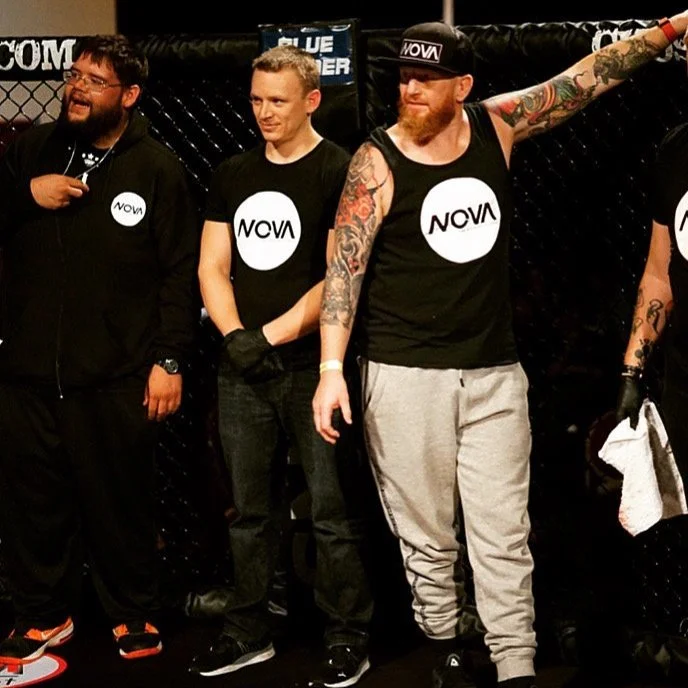
Chris Martin (with hat) is one of our combat sports insurance agents with over 20 years of insurance experience & 15 plus years of mixed martial arts.
Combat Sports Insurance Today
Although Jeremy Augusta sold his combat sports insurance business several years ago, these personal insurance programs are still available and can be found through a company dedicated to helping combat sport athletes, JiuJitsuInsurance.com. Mixed martial artists, as well as jiu-jitsu and other combat sport athletes, can find affordable insurance programs that cover them 24 hours a day, on or off the BJJ mats, in or out of the MMA octagon, and on or off the job. These combat sports plans pay cash directly to the athlete to help them manage their injuries and pay for the medical care they need.
JiuJitsuInsurance.com was founded by Chris Martin, who has spent nearly two decades on the mats practicing martial arts. He began with a passion for traditional boxing and later branched out to include muay thai, bjj, and mixed martial arts in his practice. He and all of his associates still practice combat sports. As a result, they are uniquely qualified to understand the needs of combat athletes and help them find the best insurance plan for their individual situations.
The skilled brokers at JiuJitsuInsurance.com are in your corner for all your combat sports insurance needs. Reach out today so we can get started on finding the best plan for you.
Protect yourself on and off the mats. Get affordable personal injury coverage for Jiu-Jitsu athletes starting at only $30/month from JiuJitsuInsurance.com
A Guide to Extending Your Fighting Career with Insurance.
If you are a jiu jitsu fighter, injuries are inevitable. That means that paying for medical bills is an unavoidable part of training and fighting. Unfortunately, there is no way to know how much those medical bills will cost until after you have already been injured and treated.
Large medical bills can bankrupt you, and leaving injuries untreated will end your competition career. If competing is an essential part of your life, then carrying jiu jitsu insurance coverage should be a top priority. When you are insured you have a better chance of extending your days fighting.
Types of Jiu Jitsu Insurance
There are three types of low cost insurance programs every Brazilian jiu jitsu athlete needs to know about:
Accident & Injury Plans
This type of plan sends you a check every time you have to see a doctor for an accident or injury. You can use this check to pay your medical bills, or use it for other expenses and it does not matter if you have any other coverage or not. These plans usually also include a life insurance policy. Accident and injury insurance is inexpensive, with an average cost of only $8-$25 per month.
Hospitalization Plans
The hospitalization plan pays you a lump sum payment for each day you are in the hospital. You can use this money however you wish. This plan will pay you a lump sum benefit even if you have other health insurance coverage. Hospitalization plans cost between $10 and $30 a month.

Income Insurance Plans
These plans send you monthly payments when you are out of work because of health problems. Short term disability insurance pays out quickly so that you can take care of yourself and pay your bills. Long term disability kicks in if you become permanently disabled. You will need to talk to an insurance agent to determine the price of these plans because they are usually based on your age and income.
Which Type Of Jiu Jitsu Insurance Should I Buy?
If you are older or have pre-existing medical conditions, you should purchase an accident and injury insurance plan. This plan does not require any medical underwriting or medical questions at the time of application. This means anyone will get accepted for one of these insurance plans, no matter if they have other underlying health issues or not.
If you have don’t have traditional health insurance coverage, you should definitely invest in a hospitalization plan. Even if you have health insurance, you usually are responsible for large deductibles and uncovered expenses if you are hospitalized. This type of insurance makes sense for everyone.
If you are young and healthy, you can lock in a very low rate for disability insurance. The disability plans offered through employers are often light on benefits, so it is better to buy your own income protection plan with the assistance of an insurance broker. This will guarantee that you’re getting a good plan that will help replace your lost income when you need it.
In an ideal world, every jiu jitsu fighter would have all three types of supplemental insurance as well as a traditional health insurance plan. Jiu jitsu is a high risk sport, whether you are a weekend warrior or competitive athlete. Injuries will happen, so you need to be fully prepared to face the costs of treatment and recovery if you want to get back on the mats quickly after getting hurt.
What Is The Difference Between Traditional Health Insurance and Jiu Jitsu Insurance?
Traditional health insurance plans do not pay all of your medical bills, and they do not provide you money to cover your normal bills during recovery. When you use traditional major medical plans, you can only see approved doctors and receive approved treatments. Traditional health plans also only pay money direct to the doctors, and usually leave you to still owe money.
While we always recommend that fighters have traditional health insurance, it is only a partial solution to major financial loss. Supplemental jiu jitsu insurance plans fill in the gaps so that you are not left in medical debt. These plans pay out directly to you, and they pay out quickly. Jiu jitsu insurance gives you cash in hand to deal with the day to day expenses of being injured.
Position Yourself For Recovery
Jiu Jitsu teaches you to control the frame and always position yourself for recovery. Even if you win every fight, an injury outside of the ring could take you down, ruining your finances and your fighting career. If you want to live the jiu jitsu lifestyle, you must carry the lessons you learn on the mat into the rest of your life.
In order to position yourself for recovery from injuries, you need to talk to a licensed insurance professional who also has a deep knowledge of the sport. We’re here to help, and we’re always just a phone call away.
Real-Life Examples Of Jiu Jitsu Injuries
Accidents are inevitable. You can suffer an injury even if you are not on the mat. One real-life example of this is Dean Lister. Dean was walking back home after getting food one day after work. On the way back to his home, he was struck by a vehicle.

This tragic event left Dean out of work for several months because he could not travel and teach seminars. Because he was out of work for an extended period, the medical and personal debt began to pile up rapidly.
Supplemental insurance plans pay out directly to you, and these plans pay out quickly. It does not matter if you are injured on or off the mat. These policies allow you to keep paying your bills and covering your expenses, even when you are out of work.
It is an unfortunate reality, but many combat sports athletes cannot afford medical treatment in the likely event of an injury. Miriam Nakamoto is a world champion kickboxer. She is one of the millions of people who cannot afford healthcare. A knee injury has kept this woman financially struggling and out of competition since 2013.
In an interview with Joe Rogan, she discusses the realities of life since then. Several months later Miriam Nakamoto received a blessing when she learned that Joe Rogan was willing to pay for the entire medical procedure for her knee. However, most of us will not be so lucky. Without jiu jitsu insurance, most fighters will not receive the medical care they need.
Gabriel Duniz was a gifted fighter. At the young age of 15, this boy was skilled enough to be granted a pass to compete at the adult level. During one of his fights, he became the victim of one of the most lethal injuries in sports. He suffered a spinal injury.
As a result of the injury, he severely damaged his third and fourth vertebrates. After undergoing two surgeries to realign the spine and remove bone fragments, doctors are still unsure if Gabriel will regain movement in the limbs.
What would happen to you if you were permanently disabled in a fight or during training? Qualifying for disability payments in the US takes years. Income protection insurance for short term disability is designed to pay out quickly. If your short term disability becomes permanent, long term disability insurance will send you payments for the rest of your life. Get protected today!
Frequently Asked Questions About Brazilian Jiu Jitsu Insurance
Is Jiu Jitsu Insurance Expensive?
This depends on the type of insurance you purchase. You can spend as little as $8 a month. Many fighters choose to budget $50 to $100 a month for supplemental insurance. This guarantees that they will receive fast payments every time they face a medical setback. Scott Sievewright is a Milwaukee, WI based BJJ athlete who purchased two of these plans for under $50 per month and when he tore his ACL not only did these plans pay 100% of all his medical bills but they paid him an extra $1000 bucks on top of everything. You can read all about Scott and his insurance polices in this blog post, click here >>.
What Is The Best Jiu Jitsu Insurance Plan For Me?
That is determined by your budget and your needs. It is always better to carry some form of jiu jitsu insurance when fighting. Contact us for a free consultation, and we will help you to determine the best plans for your specific needs.
Do These Plans Pay Out To Me or To My Doctors?
These plans pay you directly. A check will be mailed to your home. Supplemental insurance pays out quickly, so you get the money when you need it most. You may decide to use the money to pay medical bills, cover rent, or buy groceries. The money is yours to spend however you want.
Can I Become Permanently Disabled While Participating In This Sport?
Jiu Jitsu is a high risk sport. Every fighter will be injured at some point during their fighting career. While most fighters recover from injuries, some fighters do not fully recover and become permanently disabled. If you are serious about fighting, you also need to be serious about financial planning for these risks.
How Do I Buy Jiu Jitsu Insurance?
You need to speak to a licensed insurance agent who is also familiar with the sport. An agent can help you to identify your financial needs, determine how much coverage you need, and help you pick the best insurance policies. Give us a call today, we will give you a free consultation!

Protect yourself on and off the mats. Get affordable personal injury coverage for Jiu-Jitsu athletes starting at only $30/month from JiuJitsuInsurance.com
Torn ACL to BJJ Medalist in 12 Months – Scott Sievewright
I am here with Scott Sievewright, on February 28th, two days after the grappling event at Fuji Brazilian jiu jitsu tournament that he attended and competed in.
Scott is the owner of Primal MMA gym in Milwaukee, WI. He is also a policy holder of Jiujitsuinsurance.com. He has an interesting story because he had an injury not too long ago that required urgent medical treatment.
He has multiple insurance policies with us and because of our insurance programs that we him enrolled into, he was able to get treatment right away for his injury, and get back on the mats in time for the Fuji BJJ tournament. Scott had a successful tournament, and in fact, got second place in both of his adult divisions!
Here is an interview with Scott detailing his recovery process after his torn ACL (without surgery) and how his jiu jitsu insurance coverage paid all of his medical bills 100% as well as paid him extra cash to use during his recovery from this injury.

So Scott, how was the Fuji Brazilian jiu jitsu tournament in Milwaukee? How was your experience?
Actually, it is the first time I've done Fuji and I was very impressed with how well organized and smoothly it ran. They have their own software, which updated all the competitors where they were supposed to be, and when they were to be expected. I came away with nothing but a good perspective.
The Fuji BJJ competition in Milwaukee was well run. I was also there at jujitsuinsurance.com vendor table, so I can also attest to that. It went very smoothly and it looks like you took two silver medals, congratulations on that.
However, you're coming off a pretty serious injury. Today is February 28th, 2022, when was that injury and what was it?
Okay, so I wasn't thrilled with the two silver medals, but I was thrilled to be back on the mats. It’s been exactly one year since I hurt my knee during a training session. After an MRI, I found out I tore my ACL, two menisci, and had some other damage in the ligaments.
How, how did that injury happen? During grappling practice?
Through grappling practice. Yep. I zigged when the other guy zagged and felt the big dreaded pop.
And this was from a take down?
This was from a take down, yes.
So you just felt your knee pop?
I felt my knee pop immediately and the swelling began pretty shortly after.
How long did it take you until you got medical care?
Well, first of all, because my regular medical insurance wasn't particularly good, it was a short term insurance policy that I had with a high deductible, so I went the usual route of asking friends and people who had a little bit of experience before I finally got myself to a PT.
I got to a PT within a few days after the injury. Of course they couldn’t really tell you what's going on there, but over time as I didn't heal as quickly as I thought, the pain didn't go away as early as I thought, and the functionality didn't come back, so I finally decided to go and see an orthopedic surgeon and get an MRI.
And how many days after the accident was that MRI done? Do you remember?
I did a little “wait and see”, I did a lot of reading and educating myself, but I think it was almost one month after the initial pop.
Okay, after the visits to the doctors, the rehabilitation and also the MRI, what was the final diagnosis?
So again, the diagnosis was a partial tear of the ACL, which meant surgery was an option for me or rehab. It's kind of a coin toss, a wait and see kind of thing, which I decided to do.
I thought I'd give the rehab a good go first. So as far as medical attention was concerned, I went to a PT regularly, I saw my doctor once and I got the MRI just to confirm.
And when was this accident again?
The accident was in February, 2021.
So this has been basically one year?
Exactly one year.
And how long did it take before you started, after your accident going through PT? How long did it take before you started feeling a bit more confident on the mats?
Well, I decided to take it slowly. I turned 45 this year, so I'm no spring chicken. But I guess three months. I was pretty much incapacitated for that time. I do work as a coach in the martial arts business, so that was tough. And then I had some rehab on the side and I gradually, gradually started to get a little bit more….…
A bit more mobility or confidence?
A little bit more mobility and confidence. I think the mobility came back before the confidence. I would say from month zero to three no action. Three to six, I just found myself in very comfortable positions with people I trusted. Six to nine months, I started to get a little bit more into it, getting some of my confidence, and movement back. The last couple of months have for the most part, been back to relatively a hundred percent.
And so you're a brown belt and you were competing in the adult expert No-gi division, correct?
Yes.
What weight class?
170 pounds. And yeah, I went to the adult division. I lied about my age.
And so one year later we have you back now. the most, the most interesting detail is you had two, not one, but two jujitsu insurance policies with us.
Two accident - injury policies on top of the low cost major medical insurance. And the reason we doubled up on the accident injury policy was because we saw that there was a gap in your short term medical plan with almost a $10,000 out of pocket before the insurance company would pay anything.
So for just a couple extra dollars, we were able to put you in accident, injury policies, and both of those policies paid you directly cash benefits after you filed a claim for those injuries.
Do you remember what your total medical bills were from the doctor visits and the MRI? About roughly what was the total cost of your medical bills? And then what was the amount of money you got back from the insurance company to reimburse you for those medical bills?
Sure. Just a little bit about the insurance. I come from the UK, where we have all our medical needs taken care of, so I'm not too familiar with the American insurance system. But when I opened the gym and became self-employed, I had to buy for the first time my own insurance policy, which was a short term insurance policy. I had a very high deductible out of pocket, which was of course a concern, but I knew it would cover anything catastrophic which is why I picked that one.
This was when my friend introduced me to the jiu jitsu insurance policies and spoke to me about how these programs work as supplements to my medical plan. And I thought that might be a good way to protect myself from any kind of garden variety of small injury bills that I might incur, which wouldn't have been covered under my short term policy. I'm always hoping never to be injured but it is part of my job to be on the mats and be mobile so I figured I needed to have this coverage.
From the initial injury, from my PT, I was paying out of pocket 100%. I think I had about six visits to the PT, which I paid about $100 bucks each. Or maybe $80 bucks each. So that came in around $500 cash out of pocket for my PT. I then went to the doctors for an MRI. Between the billing coming through and going to the doctor and MRI, that came through, gonna say around $1000 dollars, just under $1000.
So, all in all, $1,500?
Yeah, just short of $1,500 for everything.
So after you git those bills you and I filed the claims together for the two accident - injury insurance plans, and both of those insurance companies paid you back directly. Do you remember the total amount you received back?
Yeah, the checks came in a kind of series. I filled out the information packets and sent them off and I didn't know what to expect.
I only had to give a very, very brief explanation of what the injury was and of course provide some documentation of the card expenses. Then the checks started to come in and they came in over a period of about 8 to 12 weeks.
I don't recall any particular order. I had three checks for almost $250. I had one check for $930 bucks and I had another one for $700 and some change. There were also a couple of $50 checks too. So I think all in all, I came away with about $2,600 in just cash checks sent straight to me.
$1,500 in medical bills, but $2,600 in checks. So you came out a couple dollars ahead. The cost for those accident injury plans was just, one of them was about $50 bucks per month for both plans.
Would you say it was well worth your investment? And if so, did having those insurance companies give you more confidence that you'd be able to go and get care quicker because you knew you would be covered?
Well, initially I was concerned about any pushback it might have got because of the injury and because I got the injury in training, but I didn't receive any pushback whatsoever. And so I was pleasantly surprised when the check started coming through. And yeah, I mean, it's not life changing money, but 1500 bucks out my own pocket and the uncertainty of extra care, this jujitsu insurance really, really helped with my reimbursement.
I'd rather I've not been injured, but I actually came out a little bit on top financially and plan never to go into training or on the mats again without the insurance to be quite honest. $50 - $60 bucks a month, just to have that peace of mind, I think is a no-brainer for all combat facilities, regardless of your insurance.
Congratulations Scott on your road to recovery, and getting back on the mats. This is the great success story of how having the right insurance coverage gives grapplers in our community the resources and cash they need to get the care required to get themselves back on the mats quicker.
I think I'd like to add Chris, I don't think it matters what your main insurance policy is. These plans are add-ons. It's a supplemental medical plan, not really an alternative. So for me to know, I can cover some of my early bills in the unfortunate event I do get in an accident, at least I have some money coming back to me. I think it's money well spent. It's certainly something as a gym owner I encourage all my students to get.
I'm pretty passionate about sharing the word and getting this information out there to the grappling community. No one is more skeptical than me about insurance plans and the insurance companies themselves, not to mention knowing how poorly the American healthcare system is run. But as I said, I am very much an advocate for Jujitsuinsurance and going forward, I expect this just to be a monthly payment .
I'm happy that it all worked out for you. Thanks and congratulations.
Protect yourself on and off the mats. Get affordable personal injury coverage for Jiu-Jitsu athletes starting at only $30/month from JiuJitsuInsurance.com

Recovering from BJJ Injuries: The Best Approach
While Jiu-Jitsu is one of the most accident-prone martial arts, it is often overlooked as such. This issue was addressed on episode eight of the podcast "Bulletproof for BJJ”. During this episode, the hosts of the show, JT and Joey, tackle the issue of injuries in the field of Jiu-Jitsu and how these injuries are inappropriately handled. Keep in mind that the hosts are Jiu-Jitsu professionals and have seen these injuries first hand. One of the hosts even goes as far as expressing that, "nobody told him or warned him in the beginning that he was going to get a ton of injuries along the way." Of course, one knows they are signing themselves up for possible injuries, however, the regularity of the injuries is becoming a growing issue with little to no help from medical professionals in many cases.
During episode eight of the podcast Bulletproof for BJJ, the hosts announce that Jiu-Jitsu athletes often lack proper education when it comes to their injuries. According to these two professionals, there is also a rising absence of discussions with BJJ practioners when it comes to treating their injuries. BJJ athletes are typically not allotted the resources for such treatment.
The biggest issue is that these injuries are continuously swept under the rug; they are the unspoken variable in the sport. According to JT and Joey, generally speaking, these athletes find out the risk of injury after having sustained said injury. Then, on top of being bombarded with an unexpected injury, the athlete is required to find medical treatment or solutions on their own; this could include seeking out your own Physiotherapist or doctor. The issue there is, the athlete should not have to be responsible for seeking out their own treatment, not when other athletes have this luxury allotted to them with no issues.
During the podcast, both hosts reflected on their time within the BJJ field and both came to the consensus that they wished their coach would have said anything to them regarding the high risk of injury. They also agreed that coaches should have contacts for outreach when it comes to their player's injuries. JT went on to say, "A little bit of outreach, before the fact, would have helped deal with many of his injuries quicker." The unprofessionalism approach that the Jiu-Jitsu field is leaning on is the biggest issue. For example, the show's hosts say: "We have a very unprofessional way of approaching the way to treat Jiu-Jitsu injuries." When you compare Brazilian Jiu-Jitsu to other professional sports, you see the difference is that other professions have a direct connection to someone ready and available to assist them with whatever injury is sustained, whereas Jiu-Jitsu athletes are being told by their coaches to "take it easy, but keep training."
Within the podcast, host JT addresses the fact that coaches simply tell their athletes who sustain injuries to "take it easy, but keep training." This is just telling the athlete to "shake it off." The hosts address these tactics as dangerous and the danger lies within the coaches not acknowledging injuries and maintaining a lack of depth and education about what the athlete's/student's limitations are.
During the podcast, they say that there needs to be a system created. JT says that this system needs to be created to where there is a "good mechanic" on duty, due to "rally driving." He said that whenever a player becomes injured, there need to be specialists and health professionals that you can turn to for advice. A great example of this is at The Academy Brazilian Jiu Jitsu in Northfield, IL where Dr. Muhibb Sadiq, DPT has his office set up right next to the jiu jitsu mats. This strategic setup provides The Academy’s students with greater accessibility to the knowledge provided by Dr. Sadiq and his associates at Element Performance & Physical Therapy and helps the students get back on the mat faster after injury.

Per JT, everyone needs a body mechanic. If you are practicing Brazilian Jiu-Jitsu, it is advised that you find a knowledgeable resource for your injuries. JT himself had to locate a doctor who was able to manage his injury. JT is considered a lucky case, it took him a while but he was able to locate someone good for his recovery. He stated, "Once you find someone good at what they do, they are gold, and you need to hang onto them. For those of you who practice Brazilian Jiu-Jitsu and have no medical assistance, there are online resources for you to access until you find someone fit for your needs.
Unfortunately we all don’t have access to training partners or friends who are physiotherapists, but there are a ton of resources on the web that you can access. Here is a list of online BJJ friendly resources for jiu-jitsu-related injuries that could help you out while on your journey:

This is a US-based YouTube Channel, known as The Jiu-Jitsu Therapist. It is run by Eugene, a black belt, and the host of the ChewJitsu Podcast. This channel has over ten years of Jiu-Jitsu training and over ten years of experience in Physical Therapy. The goal of this channel is to provide you with high-quality information and content on BJJ training, health, and injury - keeping you on the mats! It is dedicated to injury prevention, rehab, physical therapy, jiu-jitsu, training, MMA, and grappling. This could be a great source for both training techniques and injury related techniques.
Andrzej Ostapko Physioberks

This is a UK-based YouTube Channel, known as Andrzej Ostapko Physioberks. It is run by Andrej Ostapko, a Brazilian Jiu-Jitsu black belt. This channel is dedicated to Physiotherapy for sports and the general public. There is a variety of treatment modalities that are useful to help you feel better and perform better. If you are looking for assistance, watching one of these videos can go a long way for you.
The Fight Physio Blog
This is more of a website for a string of brick-and-mortar doctors. There are three locations: 135C Newton Rd, Auckland; 11/627 Mt Wellington Hwy, Auckland 1062; 17 Kalmia St, Auckland 1051. This is a Physiotherapy clinic and Rehabilitation treatment center. This business is dedicated to providing top-quality treatment to acute injuries or pains! If you are not looking for a Physiotherapist in particular and just looking for tips and tricks to assist you, there are also blogs located on this website as well.
Joana Pires:
Physiotherapist

Women Who Fight is considered a empowering woman-run website, run by Physiotherapist and black belt, Joana Pires. The website consists of articles and podcasts related to physio-related injuries - as well as other issues women struggle with. Joana Pires is employed by a private practice based in London and treats musculoskeletal disorders which result from sport-related or work-related incidents.
The BJJ Physio
This website is home to BJJ Physio. They are known for helping Brazilian Jiu-Jitsu athletes optimize their training. The business is ran and operated by Dr. Wesley Reed, a Doctor of Physical Therapy, and Brazilian Jiu-Jitsu Athlete. Meet with Dr. Wesley Reed via phone interview and receive your free consultation and customized program!
Please note that this list is compiled of just a few resources that are made readily available. There are plenty of other resources that you can stumble open with just a quick google search. If you are practicing the art of Jiu-Jitsu, please take it seriously and have a medical professional in your corner. Underestimating the risk of injury has led more than enough athletes to retirement.
Protect yourself on and off the mats. Get affordable personal injury coverage for Jiu-Jitsu athletes starting at only $30/month from JiuJitsuInsurance.com

Rogan Exposes the Danger of Staph Infections in BJJ
Fighters in Jiu-Jitsu gyms everywhere are being attacked, but not just by other fighters. Instead, there is a secret enemy that hides in the dark crevices of training spaces. It is invisible, swift, and often deadly. MMA super-fan and UFC Commentator Joe Rogan, Australian Jiu-Jitsu expert Craig Jones, and UFC Featherweight Champ, Alexander Volanoski shared some horror stories on the May 27, 2021 podcast episode of the Joe Rogan Experience. This particular MMA episode is worth a listen as these three MMA experts expose the hidden plague targeting fighters across the world: infections.

JRE MMA #110
Staph, MRSA, and Viral Pink Eye: Masters of the Take-Down.
Joe Rogan and this episode’s distinguished guests address the “elephant in the gym” that everyone is aware of, but no one wants to talk about: infections. While there is no arguing that things like Staph, MRSA, and Viral Pink Eye are bred and spread in fighting gyms around the world, it’s one of those things where everyone’s position seems to be, “if we don’t talk about it, it’s not there.”
Dealing with infections as they pertain to Jiu-Jitsu gyms is a problem that is multi-layered and complex, so it is no wonder that most fighters and gym owners are happy to sweep it under the rug and leave it there. But the fact of the matter is that these infections go beyond being a nuisance. Once they become a “member” of a gym, these infections tend to spread like wildfire. They can cause permanent damage to the infected body, and if left untreated, they can very well lead to death. But who is responsible for stopping the spread and ensuring that it doesn’t continue to be a constant problem?
“Antibiotics Wreck You” (128:52).
Jones opens the discussion about infections when he speaks of a fellow fighter who continued to compete while battling Staph. The fighter did not bother to take antibiotics for the issue, even after the infected abscess literally “exploded on an airplane” (127: 30). When asked why the fighter didn’t take antibiotics for the condition, Jones tells us the fighter, with a lack of concern for his well-being, said that it’s “just mindset...positive thinking,” not antibiotics, that will take care of the issue (128:08). A typical position of fighters, what is not being considered here is something Rogan brings to light.
Rogan says, “there’s a school of thought... should you take antibiotics or should you just compete with the Staph and take antibiotics afterward?” (128:35). Fighters put in such an enormous amount of energy into upcoming matches that they don’t want to let a “trivial thing” like Staph get in the way of all their hard work. Taking antibiotics can cause a physical reaction in the infected. Often, these drugs make them feel tired, sluggish, and sometimes worse than the infection itself. Rogan says, “antibiotics wreck you” (128:52). That is a valid reason in the mind of a competitor who must be at the physical peak of his/her game going into a match, leading to them often opt out of medical treatment.

But what Rogan points out is that “you’re putting your opponent at risk, which is a problem” (128:45). This is an issue that is not often thought of when a fighter makes the personal decision not to seek treatment for a bacterial or viral infection. They only consider how they will be affected, not their effect on others because of their decision. This is one reason why these infections can often put gyms and their members in a stranglehold. The lack of action on the fighter’s part to stop the infection is an open invitation for the illness to have a trial membership to a gym. Through a fighter choosing to grapple with their opponents rather than their medical issues, things like Staph, MRSA, and Viral Pink Eye can turn their trial into a platinum membership.
Jones proves this theory when he recounts the unbelievable tale of his time training in New York at The Renzo Gracie school. Speaking about it as if it was just a normal fact of life, he tells us he took antibiotics once a month for a week at a time for an entire year. The reason is that he caught an infection 12 times over the course of 12 consecutive months. That staggering admission should not be accepted as “normal” for anyone, especially those in a high-risk-for-injury industry. MMA fighters always expect physical assault from their human opponents, but they need to face the reality that they are under siege by invisible opponents every time they hit the mat.
Rogan goes on to point out the consequences of refusing medical treatment. He tells us about a friend’s wife who decided antibiotics were not the correct route for her in her battle against Staph, and as a direct result, she died. While she was not a competitive fighter, the risk for fighters remains the same. Though not in the forefront of anyone’s mind suffering from what starts as a minor skin infection, death can become a reality if the illness is not addressed quickly. The bottom line is this: fighters owe it to themselves and others they come in contact with to seek treatment for these infections and stay away from the gym until a medical professional says it’s ok for them to return.
There Should Be Signs Everywhere...But I Don’t Run the Gym” (136:35).
While fighters undoubtedly bear a particular responsibility for their part in stopping the spread of these infections, gyms need to do their part, as well. Proper sanitation of surfaces and equipment is essential to eradicate infections in their facilities.
Jones tells a terrifying story resulting in the fatality of a fighter who was only 18 years old. In an act that seemed harmless enough, this young man lost his contact lens during practice. He, without hesitation, simply picked the lens up off the mat and put it back in his eye. What he didn’t realize was, just that moment on the mat exposed his contact lens to Staph. Placing the lens back in without adequately sanitizing it introduced the infection into his eye, where it traveled directly to his brain. The result was death. That was a match he should not have lost because he should have never even been on the card.
Rogan points out that, in regards to infection, “A lot of gyms don’t tell young kids starting out what it is” (136:30). He is of the mindset that gyms should take the opportunity to educate new members before they actively begin training as to the different infections they are commonly exposed to as competitive fighters and what they can do to prevent the spread. Rogan goes on to talk about a friend who was exposed to Staph at a Jiu-Jitsu gym. When Rogan tells his friend he needs to go to the hospital because he undoubtedly has a Staph infection due to exposure at the gym, his friend is shocked to learn that infections were accepted as commonplace in that environment. The friend poignantly points out that “there should be signs everywhere,” warning people of the risk they run of becoming infected (136:35). Rogan agrees but says, “I don’t run the gym,” displaying the helplessness that the general public has in gyms regulating themselves for the safety of their members (136:35).
In addition to Staph, other common infections that fighting gym members are exposed to include MRSA, Staph’s meaner cousin, and Viral Pink Eye. Volanoski tells us about having MRSA, how the infection could have gotten into his bone, and how he has a permanent “hole” in his hand where his flesh was eaten away by the infection.
Jones discusses a case of Viral Pink Eye he fought for over half a year. The result of the match? Jones ultimately won, but it was not a no-contest fight. The Viral Pink Eye got in some good punches, as Jones has permanent damage in one eye because “conjunctivitis scarred [his] eye” (137:00).

Mason Fowler was infected with this super pink eye from Craig Jones in the 2019 ADCC event.
Why Are Antibiotics Not Always Enough
With the help of antibiotics, the average person can typically kill an infection like MRSA or Staph effectively. But fighters are not average. Because infections like MRSA and Staph attack a person’s immune system, fighters are often more susceptible to them and are less apt to end them effectively through antibiotics. Johns Hopkins, a leader in medical research, states, “patients who are immunocompromised have difficulty fighting the bacteria, which can become invasive and cause life-threatening infections.” It is a fact that fighters often fall into the category of those with a compromised immune system because their bodies are constantly on the verge of collapse due to the limits they push themselves to when training. The lack of sleep, extensive hours of pushing their bodies to their limits daily, and a lack of time for their bodies to properly recover will lessen their bodies’ ability to properly take on the opponents that face their immune system, thus making them more susceptible to infections such as MRSA and Staph. In addition, because they take antibiotics so often for these infections, it is more difficult for medication to fight the germs.
Until a New Fighting Stance is Taken, Infections Will Get the K-O.
Fighters condition their body not to feel pain like a “normal” person, so if they get an infection, it’s second nature for them just to decide to “fight through” the discomfort. They also give so much of themselves to their training that they don’t know or care that the infection can spread to others. Even Jones addresses this common stance of fighters when he tells us that he fought while infected with Staph. He simply says, “It was for ADDC” and shrugs it off (136:10). Because this particular event is considered like the “Olympics of BJJ,” Jones decided fighting while infected was worth the risk not only to him but to his opponents, as well. Jones’s typical attitude towards the issue furthers that fighters must change their opinions regarding competing while infected. Jones passed Staph on to two other competitors during that competition. Fighters cannot continue to adhere to this standard belief system for the spread of infection amongst themselves ever to become a thing of the past.
Since COVID became a global pandemic, it seems that gyms are now taking more precautions against the spread of illness among their members. Due to new health regulations, most gyms are using things like UV rays to sanitize equipment and surfaces like it sounds like Renzo is doing now in the “Blue Basement”. This is a practice that must continue for all members’ safety and prevent the spread of infections. It is just a sad commentary on the industry that it took a near-apocalyptic event for them to take action.
In Addition to Prevention, What else Can Fighters Do For Peace of Mind?
While most competitive fighters get their income from being in the cage or competition, they often believe that insurance is an expense that they simply cannot afford. The reality of the situation is that if they get an infection such as Staph or MRSA, the costs they will incur from medical expenses will outweigh the insurance cost so significantly that the two are not even in the same weight class. There are insurance policies available to them that just cover things like catastrophic illnesses, things like these infections that could be life-threatening, and those policies are affordable to virtually everyone. At JiuJitsuInsurance.com insurance is what we do and we can help you help find an insurance plan that does not break your bank and will help offer peace of mind to you and your family. Now, as you take the next steps to doing your part in stopping the spread of dangerous infections in your gym, take the next step and message us about picking up an insurance policy you can afford that aids your effort to battle the invisible threats that you face every day on the mats.

Banned by Danaher: 3 Jiu Jitsu Injury Prevention Rules.
Injuries are part of Brazilian Jiu Jitsu, but some practitioners argue that around 50% to 70% of the injuries in BJJ are entirely avoidable. John Danaher is one of those people who believe that although some injuries are not unavoidable, there are ways to reduce the risk of many injuries with proper knowledge and education about the application of training practices inside the gym.

Injury at a BJJ competition photo credit Giselle Villa.
According to Coach Danaher there are too many injuries that should have never happened in the first place, and often those injuries end up being the ones that are of the worst kind. Coach Danaher explains that he has observed over the years a few moves that cause 80% to 90% of catastrophic injuries and should be avoided during daily training.
Let’s take a quick look at these movements and explore why you should incorporate rules for them at your gym and educate your students to practice these movements with caution.
Jumping guard:
Let’s say that two athletes are standing in a position and the other one jumps guard. There is always a danger that if one athlete physically jumps onto the other, he is throwing his body weight onto their training partner in an uncontrolled fashion. If you perform this move in poor form, then that is dangerous for your partner.
The problem comes when both athletes are in a live situation. When the top player has one of their legs extended, the guard jumper will leap up. This will cause him to land on the bottom players front leg, hyper extending their knee joint. This can result in a serious knee injury or a broken leg.
This sort of injury makes a heel hook like a joke because these injuries are potentially career-ending. It is better to pull guard but not while you are jumping. If someone wants to pull guard, they must start from the floor, so it is 100% safe.
So, what we have learned from this is that the cause of a catastrophic injury in the sport of Jiu Jitsu is uncontrolled falling body weight. According to Danaher, this is the cause of 90% of the worst injuries in the sport.
Similarly flying submissions are also part of the problem. So, the general rule of thumb is no flying armbars or flying triangles.
Tani Otoshi
Tani Otoshi translates to “valley drop”. If someone executes this technique on you, it can feel like you have fallen down a valley. This move was originated from Judo and often you can see people trying to perform it on the mats. The throw involves positioning yourself behind your opponent and taking them straight back down.
This looks okay but if you do this clumsily the opponent is going to sit on your knee and break it. Even if you have a 95-pound woman, she can break a 230-pound man’s knee. It’s a noticeably big throw and extremely dangerous as this can easily injure your own leg or your partners. This has an unacceptably high rate of injury because typically you can get your leg underneath someone’s weight and that will destroy your own leg, or even theirs.
According to @AnthonyThrows host of the podcast “Tamami Talk” on YouTube, he says the recovery after surgery from a knee injury is long and painful. After a visiting black belt came into his Judo academy from another school and tried a “shitty Taniotoshi” that caused his injury a torn PCL, Anthony had one of the most painful injuries of his career. Anthony had heard about knee injuries from this move prior to his injury from other people but he said that he never realized how bad the injury for this move could be until it happened to him.

Injury from bad attempt at Tani Otoshi.
As I mentioned to him that I would be using his example in my blog about banned BJJ moves, Anthony even said that he is sure that “whoever is reading this blog will never fully understand how painful and devastating this injury is until it happens to them”.
Anthony went on to say that the first week after the surgery was the most painful because every time, he stood up he felt the knee fluids and blood going down his leg that felt like a car running over his leg. Anthony has since put up several clips on his Instagram profile showing proper, and improper, ways to attempt this throw.
The alternate to Tani Otoshi is the Kosote Gake where your knee is a hundred percent safe and highly effective. If you are in doubt and you are not sure what to do then just don’t do the move.
No Crashing or Slamming
If you see that there’s a lack of space in the area, be mindful. You must be respectful of others' space. If you are rolling with your training partner you can’t just go driving into other people. If a pair is practicing peacefully, try and avoid crashing into them. So, the general rule of thumb is do not invade into someone else’s space, explains Danaher.
Similarly, if you’re picking people up (off the ground) it is your responsibility to put them down safely. Often inconsiderate athletes would pick their training partners up and just smash them down on the mats. The bottom person has a higher chance of breaking their ribs, shoulder, or even could have a concussion. You are not supposed to drop people on their heads or their necks in Jiu Jitsu.
It’s important to train smart and not get carried away in Jiu Jitsu, of course, that is common sense. The tragic part is that people get injured by things that are completely avoidable. But that is all the reason we all might consider the advice of John Danaher as we explore safer ways of training in Jiu Jitsu. The first step into longevity and safety is to introduce house rules that protect everyone, which is what we call risk management.
Risk management is just as relevant in BJJ training as it is in managing one’s own wealth and managing one’s own health. So, as we consider developing safer training practices at our academies lets also consider encouraging teammates, coaches, and members of BJJ schools to explore new practices and programs that reduce & manage risk for everyone.
Find out more by clicking here >>

Jocko’s Tips for Working Professionals Starting BJJ Safely.
In the JOCKOPODCAST 44, Jocko is asked the question about how to avoid injuries when training BJJ if you are someone who works with their hands or needs to use their body for their professional duties. If you are just getting into Brazilian Jiu Jitsu for sport or hobby Jocko has some tips for you that might help you reduce your injuries.
BJJ training and injuries are going to go hand in hand if you stick to Brazilian Jiu Jitsu long enough, however not everyone can afford to get hurt or injured, explains Jocko.
Jocko goes on to explain that injuries are bound to happen in any sport or any line of work, but there are some types of professionals who need to be extra careful in training because they are the ones who need their bodies for their 9-5 jobs. This includes firefighters, cops, electricians, plumbers, construction workers, etc.
Jocko mentions how he had an 80% tear in his mcl that kept him off the mats and even though leading up to that injury he had been heal hooked by his training partner Dean Lister thousands of times it was during a day of surfing when he tore his mcl, so he prefaces his answer with “you can get hurt doing anything”. As Jiu Jitsu practitioners there is no doubt that we are certainly at a higher risk of injury then people who don’t practice our martial art.
After all that is the main reason that we started JiuJitsuInsurance.com to educate grapplers young and old about the benefits of insuring themselves with low-cost supplemental accident and injury policies that only cost around $20 per month.

If you are just getting into Brazilian Jiu Jitsu for sport or hobby, Jocko has some tips for you that might help you reduce your injuries.
So, quick financial tip before you take in Jacko’s advice on reducing injury.
Here it is; because injuries are bound to happen consider getting yourself a quote for one of our insurance policies that help you cover your medical bills (regardless of any other insurance coverage) for your injuries on, or off the mats.
Here are some of Jocko’s tips to reduce injuries when you’re starting in Jiu-Jitsu.
Pick the right training partner.
It is common sense, to avoid any injury, avoid “That Guy”. There’s always one at every gym. He is famous for hurting his partners and cranking submissions. This is often the case for beginners who are jacked up on testosterone. Pair that with a sensitive ego and you’ve got a recipe for disaster. You can always politely decline their offer to roll, there is no shame in it. To grow, you must enjoy the process, not resent yourself for not saying no.
What you can do is roll with the experienced guys. The chances of you getting hurt by a brown or purple belt are extremely low as compared to you rolling with a white belt. Why? Because experienced guys are far more accurate in executing their techniques.
Don’t neglect your warm-up!
Warming up is crucial to get your body going. Breaking a sweat before rolling is necessary to avoid injuries. A cold body makes your muscles tight, and tight muscles are more prone to injury. Make sure you participate in the warm-up drills before each class. Another fun way to warm up is to go one round with your training partner at a light pace. Stretch and get your body going in a rhythm. The more flexible you are, the better. Being tight and constricted is not good for your body, this is something that is always neglected.
Tape your fingers.
If you are someone who uses their fingers for work, then you should tape them. The tape will be your best friend to avoid injuries. Especially if you are a guitarist, a writer, a coder, a programmer, or a painter, you’ll need to protect your fingers. Finger injuries are more common in Gi. So, if you can, try and roll more in No-Gi. Training BJJ will make your fingers stronger. So, despite the risk of getting your pinky broken, you will get a strong iron-like grip if you are careful in the game.
If you need help learning how to tape your fingers for BJJ then checkout this tutorial we created for you. Click Here >>>
Be careful in standup.
Some people are more susceptible to get hurt in wrestling or standup. Compared to rolling from the ground, standup can be more difficult. Especially if you’re not physically adapted to explosive takedowns and throws, it’s going to be hard on your knees and ankles. You are more likely to get an MCL tear or have an ankle pop during standup. Now, like everything else, that does not mean you do not train in standup. For someone who is in the military, in the police, or security, they need to know how to perform takedowns, throws, and tackles.
It’s okay to say ‘no’.
Some people are more likely than others to give you injuries. That does not make them bad people, a lot of beginners just do not understand Jiu-Jitsu in depth. Every black belt was once in those shoes. To avoid hurting anyone’s ego, you can use a simple white lie to avoid rolling with them. Some of Jocko’s recommended lines are:
“I only roll with guys under 140 lbs.” or “I’m sorry, I’m with Billy over there.”
Look, a little white lie won’t hurt anybody. You don’t have to ruin the vibe by rejecting someone’s offer to dance, just be nice with it. Remember, disarming is better than confronting people.

Conclusion
Always gauge your strengths and weaknesses. If you want to train and become a competitive athlete, you won’t be able to avoid injuries all the time. You can’t avoid people all the time either. Sometimes a strong white belt can teach you a lot about the game. Rolling with the same guys will make your routine redundant so try and break the cycle occasionally.
Guys who are in their 30’s or 40’s need to strive for longevity and life beyond the mats. You must think about your family. Finally, do yourself a favor and get a Jiu-Jitsu insurance plan that can cover the high cost of your medical bills or any time needed off work. A small amount of $25 or so is worth the mental satisfaction and pays benefits all the time for active grapplers because the policies do not have exclusions for grappling (unless you fight for money).

Aaron Benzrihem: Never Quit on His BJJ Black Belt Dream.
Introduction
Injuries are a part of every sport. Especially in combat sports, any type of injury can have a debilitating effect on the athlete. Injuries are unavoidable, no matter how careful you are, if something is bound to happen, it will. That said, it does not mean the athlete should be reckless with his body. All athletes should strive for longevity and find smarter ways to train.
Today we are going to talk about Aaron Benzrihem, a black belt BJJ athlete under Bernardo Faria. He was the first black belt that Bernardo Faria ranked at a young age of only 27. Aaron is a multiple-time IBJJF medalist and has competed and won in several BJJ tournaments. He Is not only a BJJ Black Belt but an Instructor at Bernardo Farias academy, a YouTuber, and an ambitious entrepreneur with multiple businesses. A jack of all trades.
Aaron’s Journey
In the Forever White Belt podcast by Adolfo Foronda, Aaron shares his 11-year journey towards becoming a black belt. The podcast begins with Aaron discussing his initial days of training BJJ.

Image from the video - Catch Upper Belts With This FOOT LOCK click here to view>>
Throughout the podcast, Aaron and Adolfo discuss the physical toll that an athlete’s body takes while training BJJ. From the outsider’s perspective, BJJ seems like a harmless sport but only the practitioners truly understand what it takes to train and reach a high skill level in this sport. For Aaron, the path to becoming a black belt was full of injuries and hardships. Like every hot-headed young guy, he also used to push through the pain and ignore what his body was trying to tell him. In his initial days, Aaron explained how he would roll with the bigger guys, just because of his pride. That’s relatable to every man, we’ve all been there. But being a featherweight at 140 pounds and rolling with guys that are 40 pounds heavier than you is grueling. Being smothered underneath a bigger opponent is not a pleasant feeling. The only way to win against a bigger guy is to be more technical, more skilled, and more agile.
“I’m just consistently trying to utilize the strength that I have which is speed, timing, technique”, says Benzrihem.

“Injuries are par for the course, but I’ll take em”. Aaron Benzrihem has had his share of injuries on the road to Jiu Jitsu Blackbelt.
Training with opponents bigger than you is a huge problem for lighter athletes. During his days at brown belt, Aaron competed in an open weight BJJ tournament and suffered a lot of injuries competing with bigger opponents. Initially, he won against three opponents and reached the finals. He faced an opponent who was weighing in at 220 pounds and he popped Aaron’s MCL causing a type 2 tear. That injury put him on his back for almost 8 weeks. Aaron took his time to recover from that injury and started training for the Boston open. Unluckily he popped his foot three different times before actually competing in the Boston open.
With a broken foot and a partially working knee, he still managed to reach the finals in the Boston open. He fought with Edwin “Junny” Ocasio who put a foot lock on him and broke it again. Aaron’s foot was completely destroyed at this point and he had to take a long time off after that.
With a plethora of injuries dogging him down, Aaron thought about quitting. It was a discouraging chapter in his career which made him reevaluate his choices.
“Maybe I’m not cut out for this, maybe I’m just a hobbyist, maybe I don’t want to do this as hard as I think I do” he said.
This is something that has crossed every guy’s mind who is at a high level of any sport. To push through this exact feeling is something that separates the champions and the quitters.
“Even if it’s your hardest belt or your easiest, on your bad days just keep pushing through” he said.
That is the message Aaron is giving to everybody out there, just keep pushing through. Make baby steps, as long as you’re not stagnant, it is all good. Little progress is always better than no progress. Even if you have to go out and watch other people train, just do it.
Every time you doubt yourself and your ability, remind yourself what it took to get there. This mentality led Aaron to rediscover his passion for BJJ. “Injuries are par for the course but I’ll take ‘em”, he mentions. The journey does not end here, Aaron explains how he had more than just a broken foot and a torn MCL. In his days being a purple belt, Aaron got his nose broken too. This led to a severely deviated septum which further led to chronic sinusitis and chronic chest congestion. On the doctor’s advice, he got an x-ray done which showed that his cartilage was broken completely.
He kept procrastinating in getting surgery until he became a brown belt. At that point, the condition was so bad that he had no choice but to get surgery. This surely taught him an invaluable lesson to take care of himself and to not ignore the messages that his body is giving. The journey was full of ups and downs with discouraging and painful moments. Even as COVID-19 hit the world and gyms all over the country were closed Aaron still managed to get his black belt. The credit for this determination and perseverance would go to the sport of BJJ. It not only gives you the self-esteem and self-respect to push through but the mental toughness to endure pain as well.
Injuries and Recovery
Going deep, Aaron and Adolfo discuss how lighter guys are more prone to injury rolling with bigger guys. If a heavyweight is in the mount, it takes a toll on the lighter athlete’s body. “Jiu-Jitsu is unique in the sense that you’re going to consistently try to put up weight that you have no business attempting”, says Aaron. It also goes to show that if you have the knowledge and the skill, you will be able to handle a bigger opponent, that is the essence of Jiu-Jitsu. Although, body type and weight matter, that is why we have weight classes in every tournament. It’s just physics, the bigger and stronger guy is going to have the advantage of strength.
This makes a lot of athletes vulnerable to injuries. In a 2018 study at the Federal University of Santa Catarina, Brazil. Researchers took a test group of 108 BJJ athletes. Both novice and advanced athletes were tested for injuries and the statistics showed that 66.1% of advanced level athletes would get injuries in a competition. The statistics also showed that during training 54.5% of novice athletes would get major and minor injuries.
This includes MCL sprains, MCL tears, dislocated fingers, dislocated elbows, hip contusion, turf toe, fractures, and whatnot. A lot of times injuries like these can be avoidable if only fighters’ egos are kept in check. Sparring is all about learning, not dominating your partner. Aaron has had a long-term nagging injury which he caught at the age of 15. His lower back was injured and that developed into sciatica pain. The disc bulge in his lower spine caused sciatica and he did not opt for surgery to fix it. He uses basic yoga and stretching to help with the inflammation. But if he does not do the basics and follow the regimen, he will have crippling flare-ups which will cause him to take two or three days off. Not being able to walk for two-three days at this age is not healthy, don’t you agree?
Other than these injuries Aaron also suffers from a partial UCL tear on his elbow and two partial tears on his MCL. That MCL tear caused him to take a total of 12 weeks off from training. The most debilitating injury that Aaron suffered was the broken nose that caused the deviated septum which exacerbated his internal problems with infections, sinuses, and congestion.

The most debilitating injury that Aaron suffered was the broken nose that caused the deviated septum which exacerbated his internal problems with infections, sinuses, and congestion.
Conclusion - from an Jiu Jitsu insurance agency point of view:
If only Aaron knew about our Jiu-Jitsu insurance plans when he started his Jiu Jiitsu journey it would’ve saved him a lot of money on the costs of his medical treatments and recovery treatments. If BJJ injuries are really par for the course then picking up a $25 insurance policy to cover those bills seems like something all practitioners should consider if they train BJJ. Having a policy might not have changed the pain Aaron endured on his way to the top but maybe he would of got treated quicker? Normal health insurance does not always cover all the costs from accidental injuries which leaves the athlete with bill(s) to pay. However if an athlete buys a Jiu-Jitsu insurance policy (or two policies), the insurance company will pay benefits directly to you which “lightens the blow” financially while you recover from your injury.

“Jiu-Jitsu is unique in the sense that you’re going to consistently try to put up weight that you have no business attempting”, says Aaron.
A Jiu Jitsu insurance plan only costs about $25 per month. Athletes and coaches can even buy multiple insurance plans because they know for sure that these programs will pay out eventually. At the end of the day, an injury is inevitable, just like in Aaron’s journey, if he had a BJJ insurance plan before his competitions and during training, he would be able to immediately cover the cost of his surgeries and medical checkups. These things cost a lot of time and money, so it's better to go full out on your training with the ease of mind that your body, your gym, and your medical bills will be taken care while you are hurt.
To find out more about Aaron here are a few references:
You can pick up The Half Butterfly Guard by Aaron Benzrihem instructional by clicking here >>>.
You can also check out his YouTube Channel by clicking here >>>.