


BJJ tape tips for treating an injured finger quickly.
Sometimes training can lead to injuries. While injuries are never fun, if you handle them properly, they can be much easier to deal with. There is a lot of grabbing in BJJ and because of that there is a lot of strain put on the fingers. If you do injure your fingers here are some quick tips.
First, if you can, rest. Taking a bit of time off the mat or avoiding using your injured finger will give it time to heal. Combining that with using ice and it will help speed up the process. Rest as much as you can so it can heal faster.
Another great way to deal with an injured finger is by rolling in no-gi. There is a lot less strain on your fingers when you train no-gi. This could be a great option to give your finger a bit of rest.
Once you have rested or are ready to begin using your finger again, taping definitely helps. It will help keep the joints from further injury. You can tape your fingers like how I described above, and I also have some more tips below. There are plenty of ways to tape and it depends on what you are looking for. Make sure to do your research and tape appropriately.
How to Tape a Torn Ligament in the Finger
Competing in jiu-jitsu is a great goal to have and a great way to test what you have learned. Whether you’re a white belt or a black belt, going head-to-head with someone in a competition is a great way to grow your jiu-jitsu skills. No practice roll will ever give you the experience of going against someone who is trying to win just as badly as you are!
As you can see in this video here, Eugene Tsozik of the ChewJitsu Podcast was in the process of loop choking his opponent when things did not go quite as planned. Even though he got the win, he tore the ligament in his middle finger. While he was completing the loop choke both him and his opponent heard it tearing. You can see him bending over in pain as he stood up to accept his victory!
While the win was worth it, Eugene knew something wasn’t quite right with his finger. In order to continue with his next match he had to tape his finger. It’s pretty simple to do.
First, start with a strip around the finger and anchor that to the tape. Next, go across the side of the finger to the joint with the tape. After that, make an x at the side of the knuckle. Then, repeat on the other side of the knuckle -- repeat as needed for additional stability. Once you’re done, make sure the finger can bend comfortably for mobility. You can also do buddy taping, or taping one finger to another will add additional support.
Stability Finger Taping for BJJ
If you do BJJ long enough you’re going to have to eventually tape your fingers. All the grabbing and holding starts to add up so most likely you’ll eventually have to deal with some hand injuries. Taping will help mitigate those injuries and keep you rolling on the mats. Your joints and tendons will be getting extra support allowing your fingers to heal and to mitigate any further injury.
Taping for stability is especially important. While there are plenty of ways to tape out there, Eugene is going to show you one of the ways that he likes to do it. While he could do just the top joint, Eugene prefers to stabilize the whole finger. Supporting the whole finger will be especially beneficial because the tendons run up and down the whole finger, not just part of it.
First, start by making a loop at the base of the finger as an anchor. Then, he likes to go across the joint to add some stability. Then, Eugene loops over the top of the joint one way and go back down and cross over. You’ll want to alternate back and forth crossing at the joint on both sides of your finger. You want to make sure that you’re taping pretty light as you’ll still want to be able to bend your finger and not cut off the circulation. As you loop around and cross back and forth between the bottom and top of the joint it should create an X on the side of your finger. Keep doing this until you feel a good amount of stability for the joint.
After you have a good amount of stability on the bottom joint you’ll want to move onto the top one. Keep going across and looping in a similar manner as you did with the bottom joint. There should also be an X shape over your top joint, just like the bottom one. Keep repeating this as many times as you feel is necessary in order to get a good amount of stability in that top joint.
You can also go right over the top joint and not just around it in order to limit the chances of hit hyper-extending. There are many ways to tape. For example, you can tape for limiting extension, for limiting the straightening, for limiting the bending, and others.
So what he did here specifically was he left more mobility for the bottom joint of his finger and taped the top joint for more stability. It’s also a good idea to open and close your hand a few times just to make sure that it feels good with some movement. You want to be able to bend your finger, but not too much. The tape has to allow for mobility but maintain stability.
As you warm up the tape will start to loosen up a bit to add some more mobility. If, otherwise, you feel that your circulation is cut off and the tape is too tight don’t be afraid to take it off and re-tape it. You want to make sure that you have the right amount of tightness. At the end of the day, it’s really about what feels best for you. Also, if you do have an injury make sure to get it checked out by a doctor and limit your gripping.
How to Tape an Injured Thumb for BJJ
Another common injury in BJJ is your thumb. You can use taping to help with support, stability and pain relief. Here’s an example of how to do that with a video of Eugene and Chad who injured his thumb rolling.
The first thing Eugene does is start with an anchor around the wrist and thumb. Next, apply small strips from the wrist to the thumb in order to provide some extra stability. Once that’s done, use full width tape to add an extra layer of support. Add as much tape as you think is necessary to properly support your thumb. Lastly, tape a strip around the thumb and wrists to keep the tape in place while training. It’s important to make sure that the tape is snug as it will stretch as you train and it warms up. But, also make sure it’s not too tight to impair your mobility and circulation.
Hope you enjoyed these taping tips and happy rolling!
Is training BJJ without health insurance a bad idea?

We do not think you should stop training jiu jitsu just because you don’t have health insurance. Instead this article provides tips to treating injuries and covers ways for you to pay those bills without traditional health insurance. Read more >>>

5 Ways To Progress In BJJ When You're Injured.
When you're injured one of the most frustrating things is that you can't train full-time and in full capacity like you normally do. So how do you keep from losing your mojo?
Sure, you can't roll like usual, depending on the severity of your injury, but there are a lot of things you can do to keep your mind and body activated while you recover. Better to recover fast and get back to peak performance than be nursing a recurring injury that is keeping you off your game.
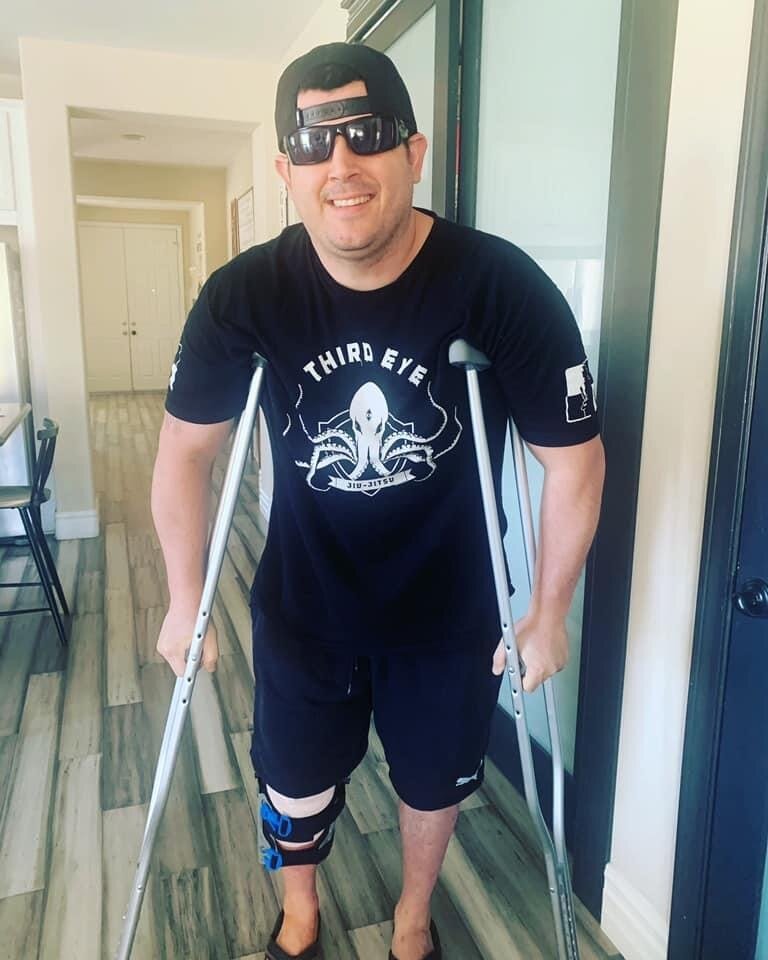
Matt Viega host of The Sports Trolls Podcast had to take some time off to heal his ACL injury.
1. Study BJJ Technique
Keep your brain on Jiu-Jitsu! Study the positions you know and keep those memories fresh.
BJJ YouTube is a goldmine. Watch Danaher, Chewy, Gracie Breakdown, and others. Hell, even get in the gym and watch people roll. You can learn a lot that way.
Visualize positions. Professional athletes use visualization as a powerful tool to achieve results. You can visualize yourself winning to get pumped up, but you can also visualize very specific techniques and movements. While it's obviously no substitute for the real thing, for those who master this skill, it could be the thing that keeps your muscle memory alive while you can't train on the mat.
Sometimes these little breaks in our training regimen are actually good for improvement because we get a chance to really breathe and think deeply about the techniques, why and how they work, and where our blind spots are.
2. Develop a Solid Game Plan for Your Comeback
Don't try to get back in the game by doing random techniques. Studying YouTube videos is great, but doing a different position and practicing in different ways will just leave you scatterbrained and recovering slowly.
Listen to your body and figure out where this injury has hurt you the most. I don't mean in your big toe, I mean has it crushed your ability to practice passing closed guard? Work on that first. Train your weak spots methodically to get back to the level you want.
Review the motions in your head until you can do them again, and drill the basics. This will get your techniques crisp and will really help with your motivation. Get some quick wins by revisiting techniques you haven't been able to do in a while.
Caveat: If these are the positions that put a lot of pressure on your injury and you're not fully healed, be aware of the potential to make things worse. Always tell your rolling partner about existing or healing injuries.
3. Train with Weights and Use Modified Exercises
So many BJJ practitioners neglect weight training for one reason or another, and if that's you, this is the time to pick it back up.
If you always weight train, good for you. Time to hit the weights a bit harder.
With less time rolling, you might find a lot of pent-up energy and you need to get that out somehow. You might be feeling frustrated or irritated! Take note that that can be dealt with through extra exercise.
There are some great resources out there for weight training programs specifically designed for Jiu-Jitsu. One of the great resources is Joe Clark and of course, you can go down an endless rabbit hole of other YouTube videos.
If you're lucky enough to afford a strength coach or trainer at your local gym, ask them to advise you on how to get the most out of your strength training while helping you have a speedy recovery.
Maybe you can't do your favorite lifts because of your injury. Modify, modify, modify! There is almost always another variation of each lift or movement that you can still do. For a finger injury, modifying your grip or using a lifting strap, or for a leg injury do lifts from seated instead of standing.
Don't forget flexibility! You don't want to get back on the mat stiff as a board because all you've been doing in your off-time is lifting heavy.
Weight training for BJJ is a great way to bridge the gap until your comeback and keep your body active all the while.
4. Work Around the Injury (But Use Protective Gear!)
Maybe you feel like a nerd wearing wrestling shoes to protect your toes, or wrapping your hand up like a mummy, but if that's what you need to do to train other positions, go for it.
Don't put pressure on your injury! If you have a hand injury, keep the hand in your gi and work without it. The protection is only there as a backup -- it doesn't mean you can go full steam ahead.
At first, you will feel so incapable, it might be frustrating. But stick with it and maybe soon you'll be feeling like a ninja, taking down adversaries with one hand tied behind your back!
You'll realize how dependent you are on using both arms or both legs. Imagine what an advantage it could be if you could do techniques with one side and leave the other side free to maneuver, while your opponent is scrambling to guard you with all four limbs.
After you heal, be sure to practice the same way with your previously injured side. It's always important to balance both sides, and you can really increase your skills this way too.
5. Use Physical Therapy to Help you Recover
To help ensure the fastest recovery possible, do everything you can to get your injury feeling better. There are many resources and facilities that can help you directly treat the injury. Every injury is different, so there's too much to cover here. That would be another article for another time.
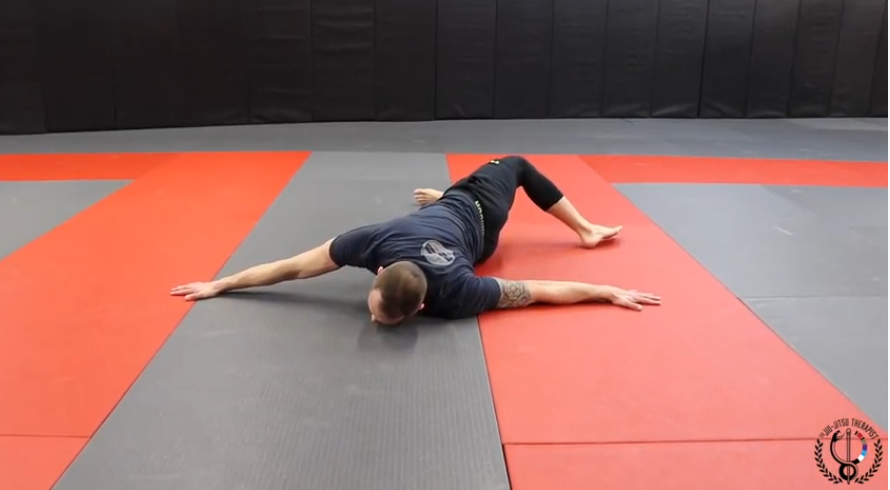
The Jiu-Jitsu Therapist Youtube channel is a great place to get PT tips for BJJ injury treatment and prevention.
Generally, remember RICE: Rest, ice, compression, elevation. Aim to reduce swelling and inflammation. Keep the joint stable, and when you're feeling better, work on the movements slowly and carefully.
I always recommend working with a professional physical therapist whenever possible. If it's not possible, check out https://thereadystate.com/ and Kelly Starrett's videos for your particular injury.
The Waiting Game
Remember that getting injured is normal! Don't get discouraged. If you never got injured training BJJ, chances are you weren't pushing yourself very hard at all. Not to say you should try to get injured, but just keep in mind that injuries are part of the game for any serious athlete.
While you're recovering from a BJJ injury, it's important to keep your head in the game and keep your body active. Motivation is really important here, to look forward to getting back full time, develop a plan and work it as well as you can.
Such a technical sport lends itself nicely to studying the subtle details of masters on video, and small improvements can make a big difference. Thinking about BJJ and visualizing techniques will keep your mind sharp.
At the same time, train for strength and flexibility. Every injury is different, so it depends on what you're dealing with, but be sure to get the extra energy out and find ways to increase your strength in areas that you've been neglecting.
When you come back, you're going to be more motivated than ever, working extra hard to advance and you'll see that increased motivation sometimes has huge benefits.
In the meantime, it might not be a bad idea to pick up an insurance program for only a few bucks per month that will help you financially with your BJJ injuries and cover the upfront costs of treatment while you plan your comeback.

Using The Flavio Almeida Mindset When Injured in BJJ.
Everyone gets used to facing difficulties in life, but we don’t all cope with them the same way. Difficulties can add up and really pin you down in life, burdening you over time. If a problem is intense, you sometimes might even need to convince yourself to do what you don’t want to do in order to grow. Flavio Almeida knows a thing or two about that. Almeida has a black belt in Brazilian jiu-jitsu and is a professional champion and teacher of this martial art. Brazillian jiu-jitsu is a high-energy sport focused on timing, leverage, and pressure, so Almeida has physically and mentally developed his sense of risk-reward. He had the benefit of great mentors, but what carried him all the way was his steadfast will. His take on success is that we should not only face our challenges but look forward to them. This is possible through perseverance and commitment as foundational values. Anyone, martial artist or not, can accomplish great things with this mindset.
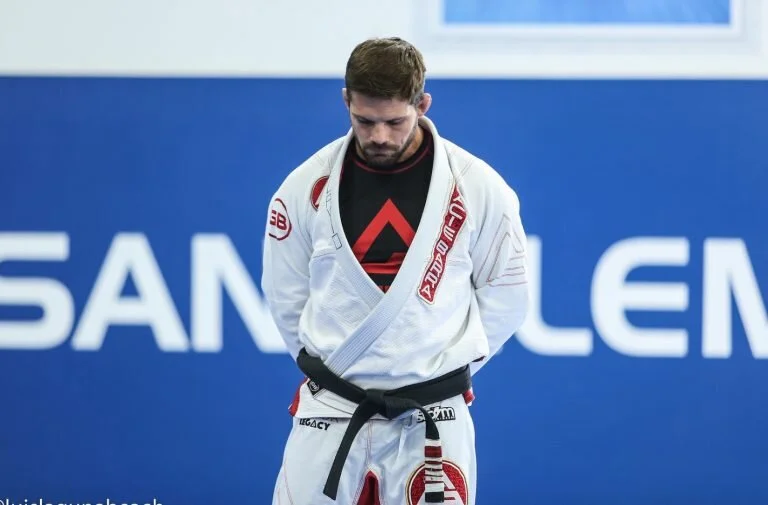
Photo Credit - Gracie Barra North Phoenix, AZ.
If you do have an interest in martial arts, Flavio Almeida is a name you’ll want to know. He got his start fighting during the early 1990s in Brazil, first with karate, then jiu-jitsu. Within the decade, Almeida became one of Brazil’s great jiu-jitsu up-and-comers. It sounds sensational, but that good fortune was born of Almedia’s can-do attitude. This is best demonstrated by a 2018 injury he has discussed. It happened in Houston during a big jiu-jitsu tournament, fighting with a team for the Gracie Barra martial arts organization. In the midst of a fight with a heavier opponent, Almeida’s foot caved in. He did win the fight and score points for his team, but he was afflicted with foot pain. Rather than drop out, he continued to fight and helped Gracie Barra win the tournament. Having successfully tested his skills, Almeida recovered from the injury after a period of walking with crutches. Powering through the pain and putting the team’s success before his comfort brought out the best in him. It goes to show that hitting a roadblock should lead to using your discretion, instead of reflexively giving up.
Almeida fought to push his limits since competition isn’t just about winning or losing. Without pushing yourself you won’t have a sense of your own skill, so you can’t set goals that help you grow. To Almeida an injury is a challenge, and each one is an opportunity to become a better version of yourself. If you’re just in a complacent routine, you deny yourself the spice of life. He also cautions that setbacks have psychological effects which easily impede goals. When you get hurt it’s easy to say that turning back makes a lot of sense. Pressing onward might seem miserable, but hypotheticals like that are a trap. Instead of making an educated guess about further risks, you put yourself down outright. With enough negative self-talk, you will kill your aspirations. Life is ultimately about growing and changing, and the trials we face are stepping stones on the journey. It’s clear that perseverance and commitment are values that protect us from becoming our own worst enemies.
Almeida’s words are not a load of hot air: research suggests that it’s beneficial to overcome obstacles. When things don’t go your way, it makes you confront who you are, what matters to you, and what you want your life to be about. That’s because you can’t afford to be weighed down when the going gets tough. Psychologists find that it’s better to think of yourself as a protagonist, not a victim. Emerging victorious and relieved allows greater altruism, a deeper sense of purpose, and more appreciation for life and loved ones. Don’t bite off more than you can chew, as problems can be resolved incrementally, especially if you develop a coping strategy. Almeida’s strategy is to see challenges as chances to test his mettle. If you want to improve in martial arts, enter a fight you aren’t sure you’ll win. That’s the nature of challenge: it’s better to pursue goals that might hurt, rather than being safe and not surprising yourself. Steel yourself and push forward, because if you test your limits, you can then judge which adventures are worth going on.
Managing pain and gain can come down to what you want out of life. Do you really want to get used to making excuses? Slacking off can reduce your interest in what you care about. You may find yourself caught in a cycle of giving up again and again. If you want to be injury-free, sit on the couch and watch Netflix. It’s better to brave your nerves and take leaps of faith. Competing while injured forced Almedia to think more carefully, making him a better fighter. Whether you win or lose, being under pressure helps you pick up new skills and create great memories. Almeida says that martial artists need to have a vision for themselves, and it’s true that we can all benefit from some sort of plan. That way, hang-ups and hurdles are mere episodes on the way to what we want. Being a martial artist isn’t easy, and everyone should learn from its demand of consistent tenacity. Dare yourself to dream, see how far you can get, and always pick yourself back up. You owe it to yourself to be a well-oiled machine, as that will improve the lives of others. After all, a quitter can’t lead by example.
Who are you? It’s a question you can struggle with your whole life. Discovering yourself is no small feat, so hit the ground running. In a world where we’re so inundated with distractions, being sedentary can appear normal. Adversity is out there, ready to make you lose sight of your goals, so stay crafty. You won’t be unscathed, as you face things you can’t prepare for, but that’s the nature of the beast. It’s said that an unexamined life is not worth living, and the same goes for an unchallenging life. Build yourself up instead if putting yourself down, and seek companions to keep you balanced. To remain fit is to nurture body and mind, to appreciate your wins and your losses. Your problems aren’t actually barriers, they’re just rougher paths. For Flavio Almeida, that’s what it is to live life fully. In the words of Friedrich Nietzsche: “What does not kill me makes me stronger”.

5 Reasons To Get A Personal Injury Insurance Policy If You Train BJJ.
For those of us spending our lives on the mats, many will get injured doing what we love. Most of the time that injury requires medical treatment of some sort.
I have been training Jiu Jitsu since 2008 and have been injured several times. Although I was always covered by a major medical health insurance policy, it didn’t seem to matter— my medical bills just kept piling up. Let’s be honest— Jiu Jitsu is a rough sport, and if you practice consistently you are going to hurt. Or should I say, “if you practice consistently you are always going to be injured?” Brazilian Jiu Jitsu, Gentle Art my ass!
HAHAA.
By no means am discouraging anyone from taking up Jiu Jitsu for fear of injury! However, what I am saying is this: If you practice Jiu Jitsu, you need to take care of your body. The unfortunate reality is that a lot of BJJ practitioners neglect their injuries for fear of drowning in unanticipated medical debt. This problem could be easily addressed with education and knowledge on getting proper medical treatment in addition to having the right insurance protection that will pay for that medical treatment.
In an effort to shed some light on the subject, you will find below a list of reasons to considering enrolling in one of these supplemental injury plans even (we call it Jiu Jitsu Insurance) if you have an existing health insurance policy.
BJJ tip from “The Crippler".
Why Get A Personal Jiu Jitsu Insurance Policy?
You might say, “I have a major medical health insurance already, so why would I need to buy an additional insurance plan for my injuries?” Here are some of the reasons someone who already has a health insurance plan might consider adding an accident - injury insurance policy to their protection:
Reason #1: You may be on the hook for thousands of dollars with your major medical plan.
If you look at the way most major medical policies are designed, it’s easy to see in the “summary of benefits” that the consumer is on the hook for most upfront medical expenses as a result from any injury. For example, if you look at your own summary of benefits for your health insurance plan, you will see items listed in rows such as emergency room visits, hospital stays, urgent care visits, and medical imaging. Next to each row is a corresponding column labeled either “deductible” or “co-insurance.”
Deductible and coinsurance percentages show the patient’s responsibility to pay before the health insurance company pays for any expenses. The average deductible in the United States is about $2,500 per person and the average out-of-pocket average is around $5000. For this example, let’s say your plan is like the average I just mentioned. That means if you sustain an injury and seek medical treatment, you have to pay the first $2,500 for your services before the insurance company pays anything.
However, unlike traditional health insurance, Jiu Jitsu insurance plans (aka injury plans) will pay you directly when you seek treatment for an injury or accident. That way you're not stuck paying the entire bill from the treatment provider. Whether or not you have health insurance coverage, these plans will pay you and you can do whatever you want with the tax-free check.
Reason #2: Jiu Jitsu coverage polices allow you to see anyone.
When you’re injured, there’s no time to waste searching for a reliable doctor who is considered “in-network.”
Most traditional health insurance policies will have restricted networks that you must go to for medical care, otherwise your medical services may not covered. On the contrary, a jiu jitsu insurance plan will give you the flexibility to see any licensed Doctor, anytime you need medical care.
Jiu Jitsu Insurance plans don’t work like traditional health insurance plans in the sense that you don’t need to show an ID card at the time or service. Instead, you will submit a claim after service and the insurance company will send a check made payable to you, which you can use to pay your medical bills or pocket the tax-free check if you have another insurance plan pays for you bills.
These insurance plans will make out a tax-free check payable to you so that you never need to worry about network restrictions and the possible penalties for going to an out-of-network provider. This will save you time and money.
Reason #3: Your current health insurance policy may not cover the unique, injury-specific treatment you need.
There is a high probability of sustaining an injury while practicing jiu jitsu. Higher than any other recreation sport or martial art due to the amount of time spent practicing as well as competing.
A recently conducted medical study addresses the prevalence of injuries during BJJ training. The study reads that prevalence of injuries in training is significant because athletes spend more time in training than in competition.The study also proves that the average BJJ athlete participates in BJJ training approximately four days per week but only competes twice per year.
Some say, “It’s rare to earn a blue belt without a couple of injuries along that way,” and I totally agree with that statement, which is why I believe a jiu jitsu insurance plan is invaluable to any BJJ practitioner.

Credit for photo by Joshua Dover. Joshua Dover pictured here at Scramble BJJ & Wrestling in Rome, GA after training.
Many Jiu Jitsu athletes look beyond traditional medical treatments for healing their injuries. Some of these alternative therapies include acupuncture, cryotherapy, red/blue light therapy, ice baths, and massage. Most of the time these treatments are not covered by health insurance. As BJJ practitioners, we are all aware of these treatments that will get us back on the mat faster, but without coverage the cost can really add up. However, since with a fixed expense injury plan you will be sent a check directly, you can use that money to pay for the cost of these services not covered by traditional health insurance.
As a matter of fact, see reason #4 below as to why you might even consider purchasing two or three of these programs from different insurance providers!
Reason #4: When you double-down on an injury plan you get double the benefits.
With traditional health insurance you might think, “Why not just get two medical insurance plans, so that they can each work to cover what the other will not?” While it’s a nice thought, that’s unfortunately, that’s not the way it works out.
Most major medical policies coordinate with each other to determine who should be the “primary payer” and who will be the “secondary payer.” Simply put— they are going to fight over who is going to pay the bills and only one of them is going to cover your costs.
On the other hand, with the accident-injury policies, it is not uncommon for people to purchase multiple supplemental plans if they are active and can foresee that injuries are going to happen.
Jiu Jitsu insurance plans are going to pay you directly no matter what kind of insurance you currently have. It’s common for active BJJ athletes to purchase multiple of these insurance plans because they know that the policy is going to pay them out directly. A jiu jitsu practitioner is much more likely to file a claim than the average insurance customer enrolled into these programs. But don’t worry! The insurance companies don’t discriminate against BJJ practitioners! You will pay the exact same monthly fee to be enrolled in these programs as the other people enrolled in these plans.
Some jiu jitsu coaches purchase multiple policies and use the funds they receive from the insurance companies to pay other coaches to run their classes while they recover. That’s a great example of how having multiple injury polices that pay you directly when injured could be use as a hybrid “short-term disability” policy. Although these programs are not meant to be considered short term disability, the proceeds that you receive from the insurance could be used to make up any unanticipated lost wages while treating your injury.
At the end of the day, nobody wants to get injured or hurt, but if you practice jiu jitsu, it’s nearly inevitable. Treatment of injuries costs not only money, but time as well. Having multiple accident-injury policies may save you tremendously on both during your recovery period.
Reason #5: Jiu Jitsu plans provide extra financial protection that heath insurance won't provide.
Traditional health insurance plan don’t provide benefits payable to your beneficiaries, as if you were to pass away— that is what life insurance is for. However, Jiu Jitsu insurance plans can act as a hybrid-type of insurance policy that not only pays the insured medical payments for injury and accidents, but also provides an extra layer of coverage with accidental life insurance benefits.
For example, some accident-injury insurance policies offered at jiujitsuinsurance.com have a built in accidental life insurance policy that will pay your beneficiary of choice a lump-sum benefit, in the event you were to pass away suddenly due to accident or injury. The lump-sum of cash, tax-free benefits, is typically in the range of $5,000 to $150,000, maybe even more depending on the insurance policy in which you enroll.
To have a policy like this adds an extra layer of protection for your family at the cost of just a few extra dollars per month. As healthy as many Jiu Jitsu athletes are, accidental deaths do happen and are actually the third leading cause of death in the United States. Life insurance may be used for surviving beneficiaries to replace income at death, pay for funeral expenses, and other debts.
At it’s core, jiu jitsu insurance plans are meant to pay for medical bills, however the added life protection for around $25 per month is definitely worth the peace of mind. At the end of the day it is important to have a health insurance plan to cover any catastrophic accident or injury however it is rare to find a health insurance plan that covers the upfront costs for treating and healing an injury. So, what’s the solution?
Click here >> to learn more about affordable personal injury insurance programs that helps the bjj community manage their medical costs as well as their financial and physical well-being. Learn more click here>>.
Already injured and just finding us now? No worries, check out the article we wrote about ways to progress in bjj when you’re injured. Check it out >>
Study mentioned in this article: click here to read study.>>