How Do Pro Grappling Athletes & Promoters buy Injury Insurance?
A Practical Overview for Professional Competitors, Managers, and Event Organizers -
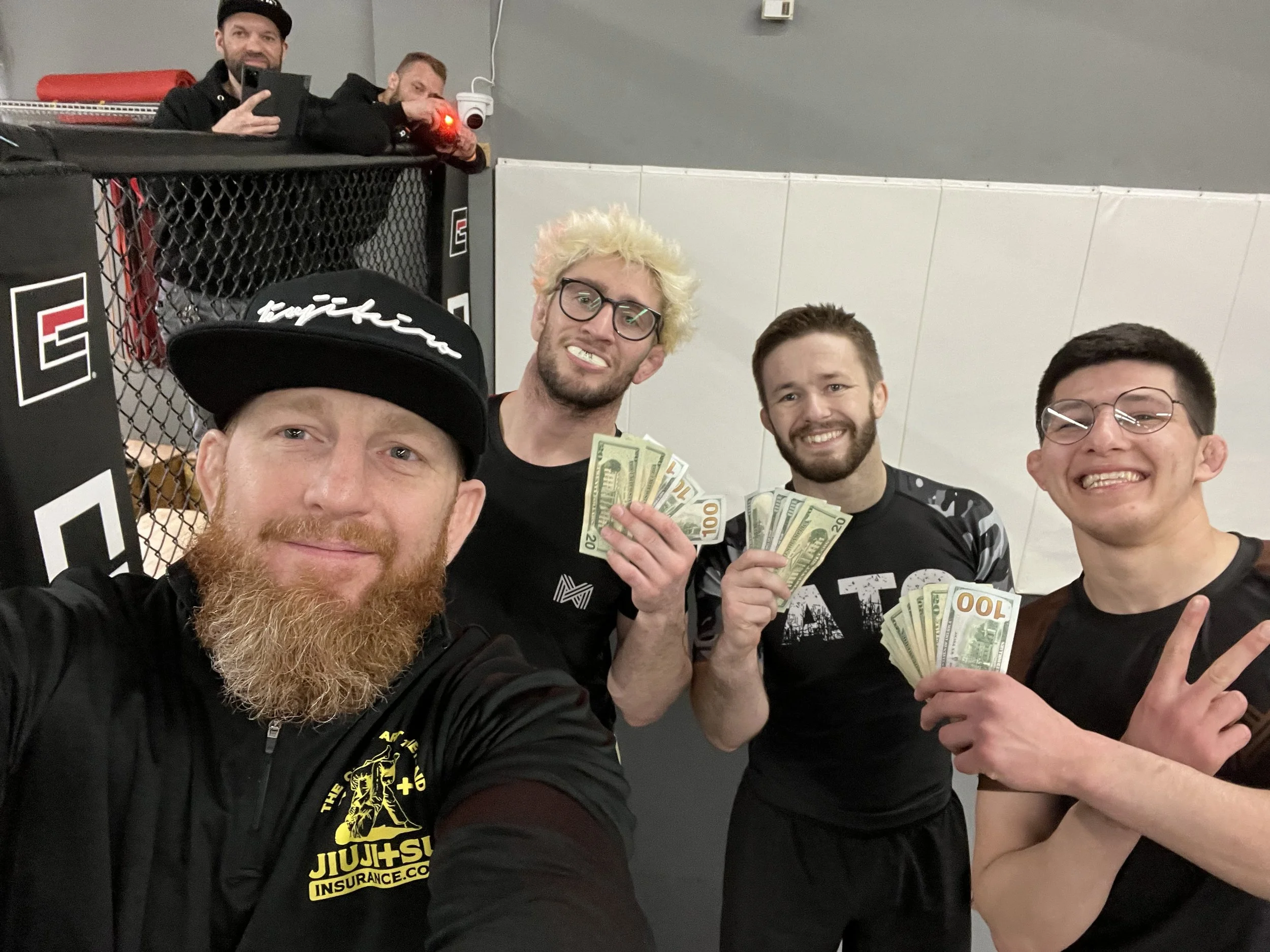
Professional grapplers who compete for cash money.
Professional grappling continues to mature as a business. Athletes are competing for prize money under promotions such as UFC BJJ, theProfessional Grappling Federation, and organizations connected to Scientific Wrestling. As the competitive level rises, so does the need for clearer conversations around injury exposure and insurance structure.
One of the most common questions from both athletes and promoters is simple:
Where do professional grapplers obtain injury insurance that applies to training, competition, and prize fighting?
This article outlines how that typically works from a risk management standpoint.
Regulation vs. Risk Classification -
In many states, submission-only grappling is not regulated by athletic commissions in the same way professional MMA is. That regulatory distinction has helped the sport expand.
Insurance underwriting, however, focuses less on regulation and more on compensation. When an athlete competes for prize money, insurers typically classify that exposure as professional participation. That classification affects how policies respond and whether exclusions apply.
In other words, even if grappling is not formally regulated, it can still be viewed as professional risk when compensation is involved.
What Promoters Usually Insure -
Promoters generally secure event-based coverage. This often includes general liability for the event and a form of blanket accidental medical coverage tied to that specific competition.
Those policies are structured to protect the event and the organization. They are not designed to provide long-term, year-round protection for individual athletes.
For professional grapplers, most injury exposure occurs in training camps, daily sparring, strength work, and other random accidents — not just on event day. That reality has led some promotions and management teams to require athletes to carry their own 24/7 accident coverage during the term of their contracts.
The Supplemental Plan Often Used in This Space -
The plan most commonly referenced within professional grappling circles is the Aflac Elite Accident Insurance Plan.
It is important to clarify that this policy was not created specifically for Brazilian Jiu-Jitsu or MMA athletes. It was designed for the general public to help offset out-of-pocket medical expenses following accidental injuries.
Its relevance to combat sports stems from policy language. A review of the form shows that it does not exclude injuries from training, organized competition, or prize fighting. That absence of exclusions is what makes it applicable to professional grapplers competing under organizations such as UFC BJJ and the PGF BJJ to name a few.

Why Many Athletes Keep the Coverage After Contracts Expire -
An interesting pattern has developed among professional athletes. Even when coverage is initially required by a promotion or management contract, many competitors choose to maintain the policy long after the contract ends.
The reason is practical.
Many professional grapplers and MMA fighters do not have employer-sponsored health insurance. Even those who do often face high deductibles and out-of-pocket costs. Supplemental accident plans of this type generally cost around $35 per month on average (based on state availability), which makes them financially accessible compared to the potential cost of an injury.
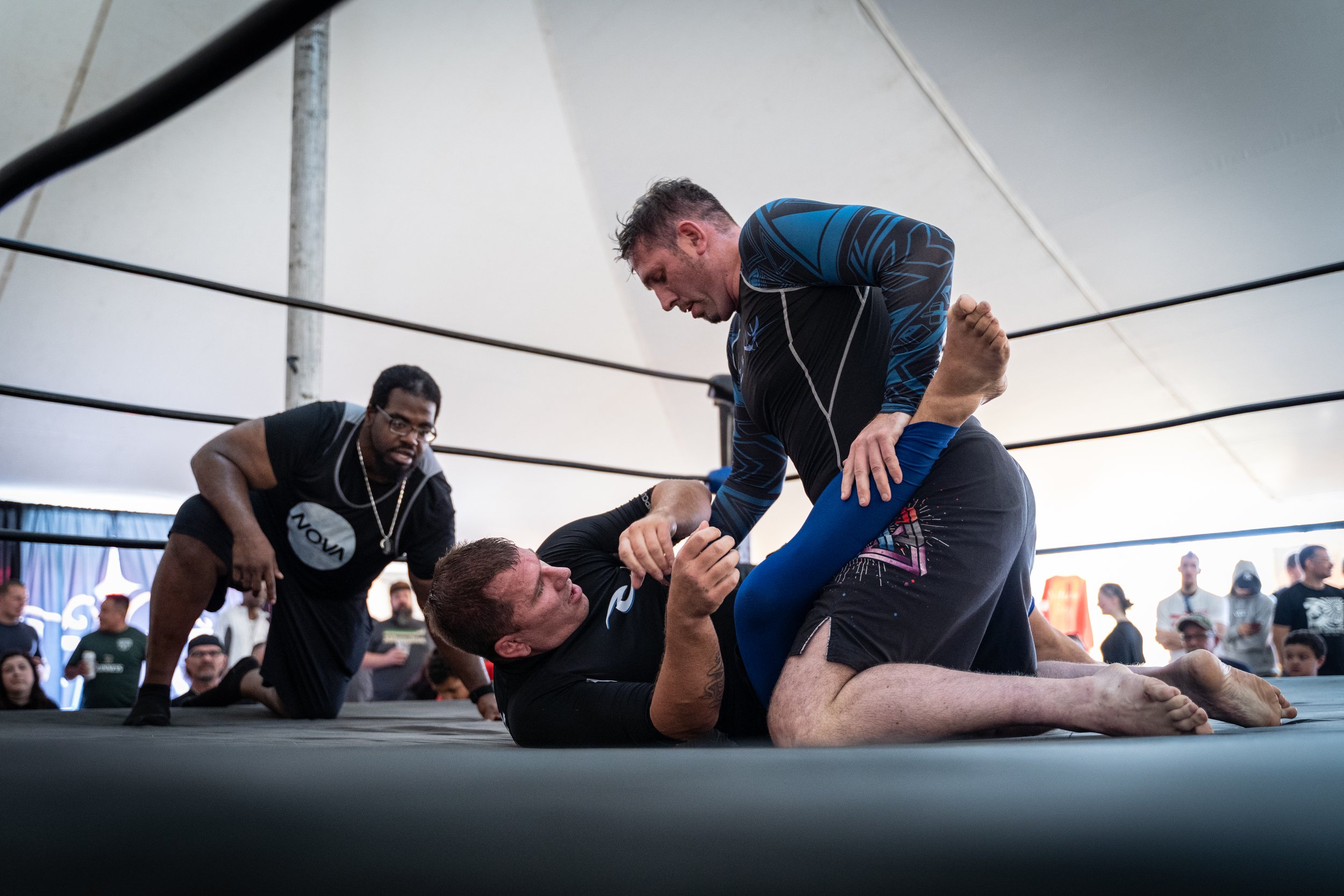
Grappling event with submission only rules. Both fighters had to have the personal injury insurance to participate.
Because benefits are paid directly to the insured athlete, the coverage can function as a financial buffer during recovery. For independent contractors — which most fighters are — that flexibility can matter more than traditional reimbursement-style insurance.
It is not uncommon for professional MMA athletes to purchase this type of supplemental accident insurance on their own, independent of any promotion requirement, simply to manage personal risk.
How Coverage Functions -
This type of policy is supplemental accident insurance. It is not major medical insurance and does not replace a primary health plan. Instead, it pays fixed cash benefits directly to the insured individual after a covered accidental injury.
Benefits may apply to emergency treatment, hospital confinement, surgical procedures, therapy sessions, imaging such as CT or MRI, ambulance transportation, and certain medical devices. There is also a sports-related enhancement that can increase certain payouts when injuries occur during organized athletic activity.
Because payment is made directly to the insured athlete rather than to a provider, the funds can be used for deductibles, copays, travel, rehabilitation expenses, or general financial obligations during downtime.
Documentation for Promoters and Managers -
When promotions or management teams require proof of coverage, enrollment verification and itemized reports can be coordinated through Chris Martin at JiuJitsuInsurance.com (who operates under NPN #7335986 and in California under #4116908) for the purpose of any contract compliance.
Important Disclosure -
JiuJitsuInsurance.com is not an insurance company. We are an independent insurance brokerage specializing in the combat sports market (who operates under NPN #7335986 and in California under #4116908). Coverage is provided by licensed insurance carriers and is subject to underwriting approval, state availability, benefit schedules, and policy terms.
Athletes and promoters should always review official summary descriptions, policy forms, and exclusions before enrolling. For detailed benefit summaries and exclusions, message us for a quote today.